How to Answer Your Child's Letter to Santa: A Reply Guide for Parents
How to write a letter from Santa in reply to your child: what to mention, how to disguise handwriting, what to say about gifts, and when to deliver it.
Short answer: to answer your child's letter to Santa, write a short letter from Santa that quotes one thing from their letter, praises something specific from their year, answers any question they asked, and stays general about gifts. Disguise your handwriting, use paper they have not seen, and deliver it a few days after they send theirs so it feels like it traveled.
A reply turns a one-way letter into a conversation. Kids who get one often write back the next year with even more detail, and the replies become a family archive. You do not need to be a great writer. You need ten quiet minutes, the child's letter in front of you, and a plan for how the reply will show up. This guide walks through that process, step by step.
Before you write: reread their letter
The whole reply rests on the child's own words. Read their letter slowly and pull out three things:
- One detail to repeat. A pet's name, a lost tooth, a new school.
- One question to answer. If they asked nothing, pick something they seem curious about.
- One worry to ease. Kids often hide a worry in a letter: a chimney that is too small, a move, a sick grandparent.
Write those three things on a scrap of paper. That is your outline.
How to answer a letter to Santa in six steps
- Open with their name and a thank you. "Dear Theo, thank you for your letter, it made me laugh."
- Repeat a detail. Show Santa read it: "I am glad your hamster, Peanut, is feeling better."
- Praise something specific. A real moment from the year, not a generic "you were good".
- Answer the question. Keep it playful and a little mysterious.
- Ease the worry. "Do not worry about the chimney. I have my ways."
- Close warmly. A line about next year, Mrs. Claus or the reindeer, and the signature.
Five or six sentences is plenty. Short replies sound more like a busy Santa.
Make the handwriting and paper convincing
Kids know your handwriting from lunch notes and birthday cards. A few tricks:
| Trick | How to do it |
|---|---|
| Change hands | Write with your non-dominant hand for shaky, old-fashioned letters |
| Change style | All capitals, or large loopy cursive if you usually print |
| Type it | Use a playful font and sign by hand with a flourish |
| New pen | Gold, red or green ink you never use for anything else |
| New paper | Cream paper, a torn edge, or a snowflake border |
| Ask for help | A grandparent or friend writes it from your draft |
Whatever you choose, keep it the same from year to year. Kids compare.
Reply examples in Santa's voice
These show how the six steps sound once they are put together. Swap in your own details.
A reply to a six year old who asked about elves:
Dear Theo,
Thank you for your letter. The elves passed it around the workshop because they loved your drawing of the sleigh.
You asked what elves do on weekends. They mostly play in the snow and have hot cocoa contests. Jingle always wins.
I heard you helped your mom carry the groceries every Saturday. That is real helper work.
Give Peanut a sunflower seed from me. Love, Santa
A reply that gently nudges behavior without scaring:
Dear Ava,
I got your letter and I am so happy you are learning to read.
The elves told me sharing toys with your sister has been tricky sometimes. That happens to everyone, even elves.
I know you can keep trying, and I am proud of every time you do.
See you soon, Santa
A joint reply to two siblings:
Dear Mia and Leo,
Thank you for your letters. It is not every day I get two from the same house.
Mia, I heard you scored your first goal. Leo, I heard you finally made it across the monkey bars.
The reindeer are practicing landing on your roof already.
Love to you both, Santa
What to say, and not say, about gifts
This is where replies go wrong. A letter from Santa that promises "your scooter is ready" breaks when the scooter sells out or a grandparent buys a different one.
- Say: "The elves are busy with your list." "I have a few surprises planned."
- Avoid: naming the exact gift, the exact number of gifts, or comparisons with siblings.
- For a wish that is not coming: explain kindly that some things are family decisions, like pets, or too big for the sleigh.
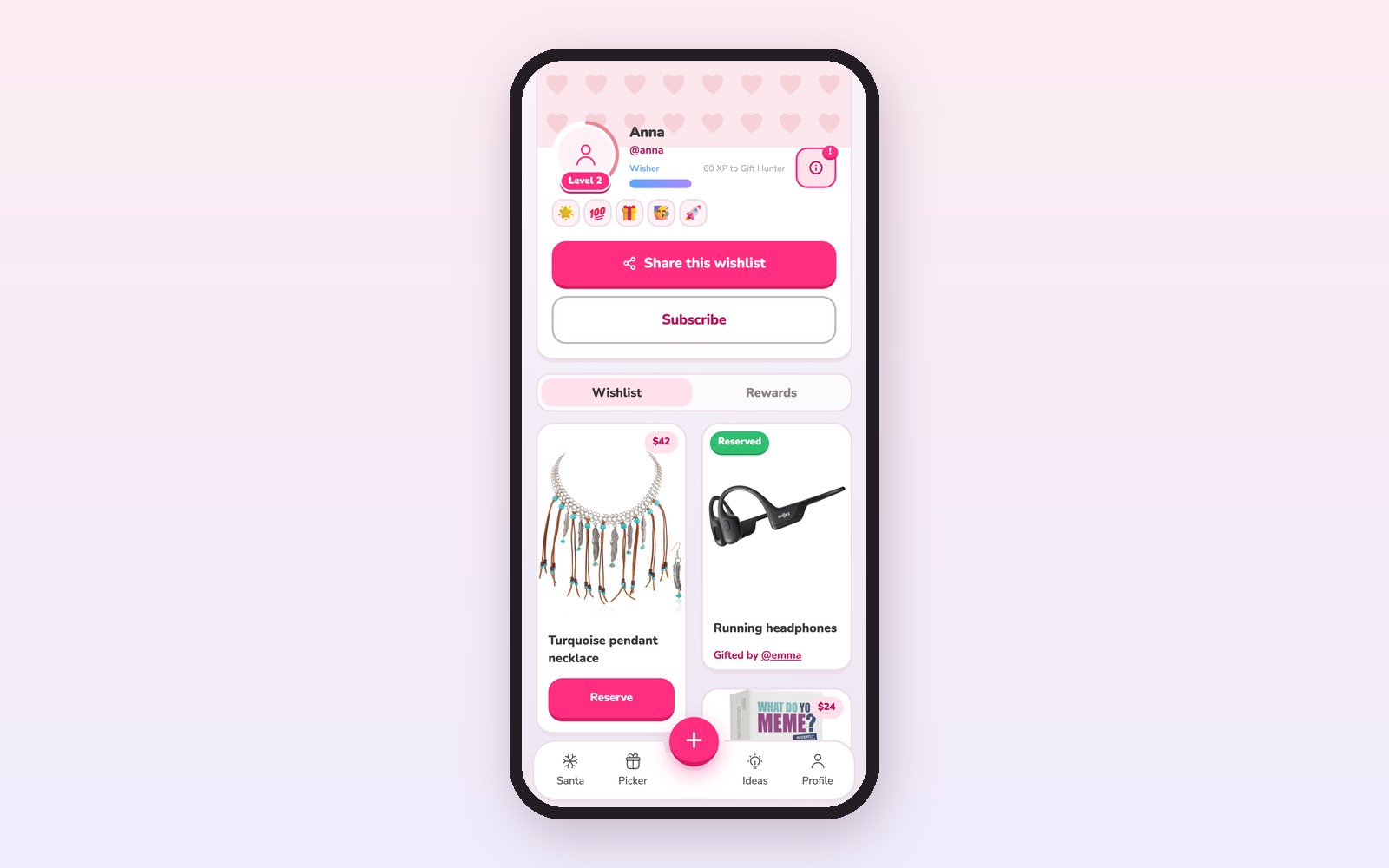
Fewer gift mix-ups also make the reply easier to write. If your child's wishes are on a shared GiftX wish list, relatives reserve an item before they buy it, so two people do not show up with the same toy. The list owner does not see who reserved what, so even the parent who manages the list gets a few surprises.
Timing and delivery
When the reply arrives matters almost as much as what it says.
- Wait a few days after the child sends their letter. An instant reply feels suspicious.
- Aim for mid December so it builds excitement before Christmas Eve.
- Pick a delivery method: the real mailbox, the fireplace in the morning, tucked in the tree, or handed over by an "elf" relative.
- Add evidence. A dusting of flour "snow", a candy cane, a reindeer bell next to the letter.
If you mailed the original through a post office program and their reply is slow, your reply can cover the gap. Our guide on where to send a letter to Santa explains how those programs work.
Keep both letters together
Save the child's letter and Santa's reply in the same envelope, dated on the back. Years later, reading them side by side is often the best part. A quick photo of both on your phone protects against lost boxes.
For the wish list itself, GiftX Letter to Santa gives you a second keepsake. It turns your child's GiftX wish list into a picture of a handwritten-style letter with each wish and its photo, in four styles your child can choose from. Save it or send it to family. It is free. It is a picture of the child's wishes, not a printable PDF and not a reply from Santa, and nothing is mailed anywhere, so your handwritten reply is still the main event.
Frequently asked questions
How long should a letter from Santa be?
Five to eight short sentences is ideal. That is enough to repeat a detail, praise something specific, answer a question and close warmly. Longer replies start to sound like a parent. For toddlers, three sentences read aloud is plenty. For older kids, you can add a bit of North Pole news, but keep it to one page at most.
Should Santa's reply mention the child's behavior?
Gently and positively. Mention specific good moments, and if something has been hard, frame it as a challenge Santa believes they can handle. Avoid threats about the naughty list or coal. A reply that makes kids anxious can spoil Christmas Eve. Encouragement does far more for behavior than warnings from the North Pole.
When should Santa's reply arrive?
A few days to a week after your child sends their letter, ideally by mid December. That gives the reply time to feel like it traveled and builds excitement before Christmas Eve. If your child mailed their letter through a post office program, your reply can arrive as a quick note while the official one is still on its way.
More reading for Santa's helpers
For ready-to-adapt replies by situation, see our sample letters from Santa. For other notes from the North Pole, try Elf on the Shelf letter ideas. For timing the whole season, read when to write a letter to Santa, or browse all our gift exchange guides.