 GiftX
GiftX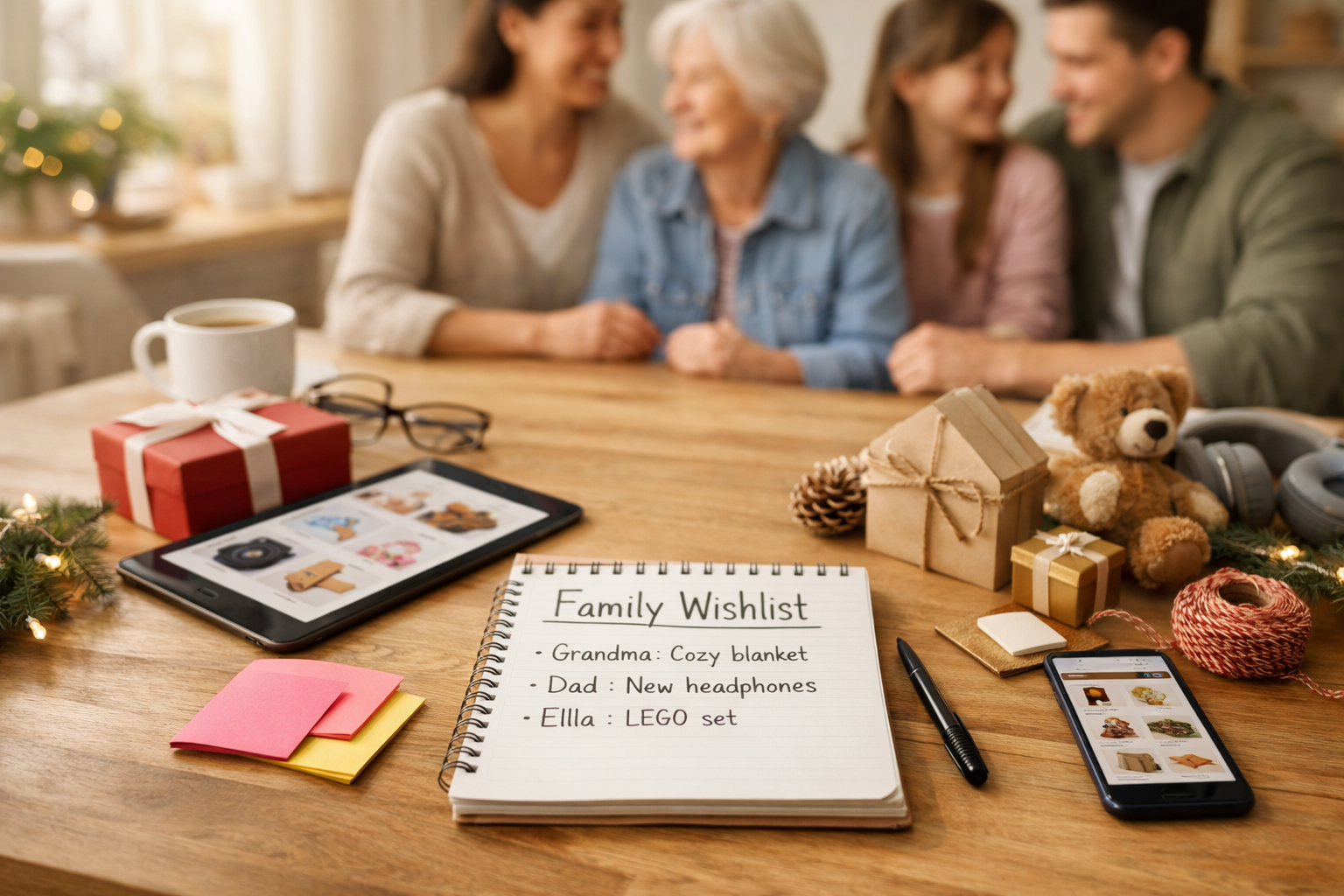
Last December, my brother called me in a panic three weeks before the holidays. "Emma, I have no idea what to get for Dad, and I don't want to buy him another bathrobe he'll never wear." That conversation sparked something - I realized our family of 12 had never actually shared gift ideas in any organized way, and we were constantly duplicating purchases, guessing blindly, or worst case, giving gifts that ended up unused. I decided right then to build a family wishlist system that would work across our wildly different ages and tastes.
A family wishlist is a centralized, shared document or platform where all relatives - from kids to grandparents - list items they'd genuinely want, organized by occasion and person. The magic is that everyone can see what others already plan to give, which prevents duplicate gifts, makes shopping intentional instead of stressful, and actually helps grandparents and younger relatives know what's meaningful to buy for each other. I've used this for 18 months now across my extended family of four generations, and it's genuinely transformed how we give gifts.
Below I share the exact system that worked, then rank the seven best family wishlist apps for 2026 so you can pick the right one for your own family in minutes.
The Problem I Kept Running Into
Before I got organized, gift-giving in our family was chaotic. My mom would buy my nephew the same LEGO set my husband already bought. My aunt would get my daughter a craft kit we'd already given her for her birthday. Dad would end up with five coffee mugs - all thoughtful, all unused. The real frustration wasn't the duplicate items themselves; it was that we were spending money without truly knowing what people needed or wanted.
What made it worse was the guilt of guessing. When you don't have insight into someone's actual preferences - especially older relatives or younger kids you don't see often - you either play it safe with something generic (another sweater, gift card) or take a swing in the dark. And sometimes that swing lands on something they already have. I'd watch my dad politely smile while opening his fifth houseware gadget, and I'd think, "There has to be a better way to do this."
The other issue was timing. My sister-in-law would mention in November that she wanted a specific book, but by December, half the family had already bought gifts elsewhere. There was no central record, no way to coordinate, and no transparency about who was buying what.
What I Tried First (and Why It Flopped)
My first attempt was a Google Doc - simple, free, and we all had email. I created a shared spreadsheet with columns for Name, Birthday Wishlist, Christmas Wishlist, and Notes. I sent it to the family group chat with instructions: "Please add your items and update what you've bought."
It lasted three weeks. Here's why: nobody checked it consistently. My 14-year-old nephew didn't want to type out his ideas in a shared Doc. My mother-in-law forgot her password halfway through. My uncle added his items but never updated what he'd purchased, so my aunt accidentally bought something he'd already requested. The system required too much manual discipline and follow-up.
Then I tried a private Pinterest board. Same result - it felt clunky for updates, and tracking who was buying what was impossible. There was no way to say, "I'm getting this for them," so people just kept adding pins without knowing someone else had already claimed the gift.
What I realized was that I needed a tool designed for shared wishlists, not a tool I was retrofitting. That's when I explored options that actually handle group gifting and family coordination.
The Approach That Actually Worked
I started using Wishlist features designed specifically for families - platforms where each person can create their own list, others can see what's on it, and importantly, there's a way to mark "I'm buying this" so there's no guesswork. The game-changer was visibility: everyone could see not just the wishlist, but who was responsible for each gift.
Here's exactly how I set it up. First, I created a master list for each major holiday: Christmas, birthdays, graduations, and anniversaries. Then I invited everyone - starting with my immediate family (6 people) and gradually expanding to extended family (now 12). For each person on the list, I set up a dedicated wishlist section with a deadline for adding items (I use the 15th of the month before the occasion, which gives us time to shop).
The magic moment came when my mom could actually see that my brother had already committed to buying my dad a new coffee grinder. Instead of duplicating that purchase, she pivoted to something else on his list. Within three gift-giving seasons, we'd cut down duplicate purchases by about 80%. More importantly, every gift now felt intentional.
I also added a note field for context. My aunt wrote "gluten-free cookbook - she's just been diagnosed" next to an item, which helped everyone understand the why behind the gift. This transformed wishlists from cold shopping lists into conversations about what people actually need and care about.
How to Create a Family Wishlist (Step by Step)
If you want the short version of everything I learned, here is the setup that finally stuck. The whole process takes about ten minutes, and you only have to do it once per occasion.
- Create a free family list and name it clearly. Pick a name everyone recognizes, like "The Garcia Family - Holidays," or create one list per person. A clear name is what keeps a scattered family looking at the same page.
- Add gifts from any store. Paste a product link from any online retailer and the title, price, and image fill in automatically. You can also add gifts that have no link at all - experiences, gift cards, or a cash contribution - so nobody is boxed into physical products.
- Customize each family member's list. Give every person their own section and tailor it to them: simple toy picks for the youngest kids, a wider mix of clothes, tech, and experiences for teens and adults.
- Invite family members to collaborate. Share the list by a single link - text, email, group chat, or social - so relatives can add their own ideas and view everyone else's. On the platforms I recommend, no account is needed just to view a list or reserve a gift.
- Set up a group gift or cash fund (optional). For big-ticket items, let several relatives chip in together toward one present or a cash fund instead of everyone buying smaller duplicate gifts.
How We Tested and Ranked These Apps
I didn't want to recommend anything I hadn't actually run with real relatives, so every app below was judged against the exact problems that broke my early Google Doc. Specifically, I looked at five things: how easy it is to add an item (paste-a-link versus manual typing), whether it supports universal stores or locks you into one retailer, whether it prevents duplicate gifts through reserving or claiming, whether relatives can view and shop without creating an account, and how well it handles a multi-generational family from young kids to grandparents. I weighted duplicate prevention and ease of adding items most heavily, because those are the two failures that kill a family list within weeks. Pricing was checked to confirm each tool has a genuinely usable free tier.
The 7 Best Family Wishlist Apps for 2026
After running this system for 18 months and testing the alternatives, here is my ranked list. GiftX is my top pick because it combines effortless adding with AI-powered gift ideas across every generation of my family.
-
GiftX - Best Overall Family Wishlist App
GiftX is the app I keep coming back to. It's built around saving gift ideas to your wishlist and sharing with friends and family, so each person gets their own list, everyone can see what's on it, and gifts can be claimed so nobody buys the same thing twice. What sets it apart is that it works entirely on mobile - my sister-in-law can add an idea while standing in the aisle at Target instead of waiting to get home - and it leans on AI to suggest gift ideas when a relative has no clue what to buy. It handled my four-generation family better than anything else, from my tech-shy dad to my teenage niece. It's free to start, so it's the easiest one to get the whole family onto.
-
GiftList - Strong for Universal Store Coverage
GiftList is a free universal wishlist maker built for the whole family. You create a free list, add items from any online retailer with no store lock-in, and share it with a single link that relatives can view and shop without needing an account. Its standout feature is real-time reservations that prevent duplicate purchases while keeping the gift hidden from the recipient, plus a Gift Tracker and automatic birthday reminders that keep the family on schedule. A browser extension and iOS and Android apps round it out.
-
Giftster - Purpose-Built Family Gift Registry
Giftster bills itself as "the family wish list maker," and it's a solid free family gift registry. It's designed for group occasions - birthdays, Christmas, Secret Santa draws, weddings, and baby showers - and lets relatives reserve gifts so purchases don't overlap. If your family's main need is a dedicated, no-frills registry for recurring holidays, Giftster covers it well.
-
DreamList - Simple Online Wishlist Builder
DreamList focuses on making it easy to build an online wishlist that turns thoughtful gifting into a low-effort task for friends and family. It's a straightforward option if you want a clean, shareable list without a lot of extra settings to configure.
-
GoWish - Lightweight Shared Lists
GoWish is a lightweight wishlist app for sharing gift ideas with family and friends. It's a good fit if you want something minimal that relatives can open quickly, without a steep learning curve for the less tech-savvy members of the family.
-
Family Gift - Shared List for Households
Family Gift is a shared wish list app aimed squarely at households coordinating presents together. Available on Google Play, it centers on the shared-list use case, so everyone in the family can see and contribute to the same list.
-
My Wishlist - All-Occasion Wishlist
My Wishlist lets you create a wishlist for birthdays, Christmas, and more. It's a basic all-occasion option that rounds out this list for families who just want a simple place to jot down and share what they want.
Family Wishlist Apps Compared
| App | Best for | Add from any store | Claim / reserve gifts | View without account | Free to start |
|---|---|---|---|---|---|
| GiftX | Best overall, AI gift ideas across generations | Yes | Yes | Yes | Yes |
| GiftList | Universal store coverage | Yes | Yes | Yes | Yes |
| Giftster | Dedicated family registry, Secret Santa | Yes | Yes | Varies | Yes |
| DreamList | Simple online list | Yes | Varies | Varies | Yes |
| GoWish | Lightweight sharing | Yes | Varies | Varies | Yes |
| Family Gift | Shared household list | Varies | Varies | Varies | Yes |
| My Wishlist | All-occasion basics | Varies | Varies | Varies | Yes |
5 Rules I Wish I'd Known Earlier
After running this system for over a year, I've learned what actually works and what creates friction:
- Keep price ranges realistic and transparent. When my cousin added an expensive watch to her wishlist, it created awkward silence. I added a guideline: list items across a range (some under $20, some $20-50, some $50-100). People can stretch for milestone gifts, but ranges help manage expectations and prevent hurt feelings.
- Make adding items dead simple. The fewer clicks to add something, the more people participate. When it took too many steps, my uncle just gave up. Now I show people how to add a wishlist link or quick description, and participation doubled.
- Update the list 4-6 weeks before the occasion. This gives enough time to ship items, especially if you're ordering online. I send a gentle reminder in the group chat to add anything new or remove items already purchased.
- Handle age-appropriate items separately. For my youngest niece (age 4), I created a simpler list with mostly toys under $30. For my teenager, it's more diverse - experiences, clothes, tech. Tailoring the format to each generation made participation higher.
- Track "claimed" gifts openly. This prevents duplicate buying more than anything else. When someone says "I'm getting her the blue hiking boots," it's off limits. I check the list before every shopping trip now, a habit that saves so much regret.
Common Mistakes to Avoid
A few pitfalls tripped up my family before the system settled. The first was choosing a tool that required everyone to type items in manually - it always died within weeks because the less patient relatives simply stopped. The second was letting people buy a gift without marking it as reserved, which reopened the exact duplicate problem we were trying to solve. The third was leaving the list until the last minute, so online orders didn't arrive in time. And the fourth was forgetting the non-shoppers: my grandma will never open an app herself, so my mom updates the list on her behalf. Plan for the least tech-savvy person in the family and the rest takes care of itself.
How I Organized Mine Across Generations
Since my family spans from age 4 to 87, I had to think about what each generation actually finds easy to use. My dad (retired, not super tech-savvy) needed simple access - I made sure his list was easy to view on his phone. My teenage niece wanted options - she likes finding items herself and adding them. My grandmother likes the idea but rarely checks it, so my mom updates her list on her behalf.
The structure I landed on uses simple categories: each person gets their own section (organized by who they are - "Emma's List," "Grandma's List," etc.), and within that, it's organized by occasion. I also added a "Experiences" section because not everything is a physical item. My dad's list includes "help with yard work on a Saturday," which my nephew claimed, and it honestly meant more to him than any gift we could buy.
For tracking purposes, I use a shared color system: green for "someone's buying this," yellow for "under consideration," and white for "still available." It sounds basic, but it prevents the awkward moment where three people buy the same thing thinking nobody else will.
The Tools That Made It Stick
After trying multiple approaches, I found that saving gift ideas to your Wishlist and sharing with friends and family was the most seamless way to coordinate across our group. What made the difference was that I could see everything in one place, people could claim gifts without sending multiple messages, and reminders were built in.
I also appreciated that the system worked on mobile - my sister-in-law could add a gift idea while shopping at Target without having to wait to get home to a computer. That ease of access meant the list stayed current instead of becoming a static document nobody updated.
For tracking gifts we'd already purchased, I kept a simple spreadsheet alongside the main wishlist. This became my personal shopping reference: "What do I still need to buy? What's already claimed?" It's low-tech, but it keeps me organized in the weeks before each holiday.
What Happens When You Do This Right
This year, for the first time ever, everyone in my family received something they actually wanted. Not just something acceptable - something they'd specifically asked for. My dad got the coffee grinder he'd mentioned wanting for two years. My niece got the art supplies she'd been hinting at. My uncle finally got the book he'd recommended to everyone at Thanksgiving.
But the biggest shift was the conversation it sparked. My grandma now calls people on their birthdays and talks about the items on their list - it's become a way to connect. My cousin said it made her feel heard and seen, knowing her family had asked her what she wanted instead of guessing. And from a practical standpoint, we're spending less money overall because we're not buying duplicates or things that go unused.
The system also handles the tricky dynamics of extended family and in-laws. I have friends whose in-laws used to feel hurt because nobody knew what they wanted. Now everyone's included in one shared space, and the guesswork is gone. It levels the playing field - your preferences matter just as much as anyone else's.
My Final Take
Creating a family wishlist feels like a small thing, but it's genuinely changed how we give gifts. It removes guilt, prevents waste, and makes holidays less stressful for everyone. Of the seven apps above, GiftX is where I'd start in 2026 - it's free, works on everyone's phone, and its AI gift ideas take the pressure off when you're stumped. Whether you pick GiftX or one of the alternatives, the key is starting somewhere. Your family is probably sitting on the same frustration mine was - too many guesses, too many misses, too much money on things that don't matter. A simple, shared wishlist fixes that.