White Elephant Rules: How the Gift Exchange Game Works
The standard White Elephant rules in plain steps: how to draw turns, open or steal a gift, cap the steals, end the game and fix the usual problems.
Short answer: the basic White Elephant rules are simple. Everyone brings one wrapped gift within an agreed budget, players draw numbers for turn order, and on each turn a player either opens a new gift from the pile or steals an opened one. A gift can be stolen a limited number of times, usually three, and the game ends when every gift is opened.
That is the whole game, but the details decide whether it takes forty fun minutes or two tense hours. Most groups fight over the same three questions: how many steals, what happens to the person who gets robbed, and whether the first player gets a second chance. Below is a clear default you can read out loud, then the variations and fixes for the moments that go wrong.
The basic white elephant rules, step by step
Read these to the group before the first gift is touched. Agreeing out loud is what prevents arguments later.
- Everyone brings one wrapped gift that fits the budget. No names on the tags.
- All gifts go in one pile in the middle of the room.
- Each player draws a number from a hat. That number is their turn.
- Player one picks any wrapped gift and opens it so everyone can see.
- Each next player chooses: open a new wrapped gift, or steal any gift that is already open.
- A player whose gift was stolen immediately chooses again: open a new gift or steal a different one.
- You cannot steal back the gift that was just taken from you in the same turn.
- A gift that has been stolen three times is frozen and stays with its third owner.
- When the last wrapped gift is opened, player one gets a final turn to swap with anyone, if they want.
- The game ends after that swap. Everyone keeps what they hold.
Rule six is the one people forget. The turn does not pass to the next number until someone opens a new wrapped gift. A single turn can trigger a chain of steals, and that chain is where the laughter happens.
What to settle before the game starts
Five decisions make the game run itself. Put them in the invite so nobody shows up surprised.
- Budget. Pick one number and say it twice. Common ranges are $20, $25 or $50, and $25 is a comfortable middle ground for adults.[1]
- Gift type. Funny, useful or a mix. A mix works best, because a few genuinely good gifts give people something to steal.
- Steal limit. Three steals per gift is the standard. Two keeps a big group moving faster.
- Wrapping. Every gift wrapped, no store bags with the receipt showing.
- Who plays. Only people who brought a gift draw a number. Spouses who did not bring one can watch and heckle.
How stealing works in White Elephant
Stealing is the point of the game. A boring gift becomes a good one only when someone else wants it.
When it is your turn and you choose to steal, point at an opened gift and take it. The person you took it from now has a turn of their own right away. They may open a wrapped gift or steal from someone else, but not the gift you just took. Many groups also ban stealing a gift that was already taken earlier in the same turn, which stops two people from trading the same blender back and forth.
Freezing is what keeps the game from looping. Count steals out loud, or put a sticky note on the gift each time it moves. On the third steal, the gift is frozen. If you play with kids or a very competitive office, set the limit at two.
How the game ends and why player one gets a last turn
Player one has the worst position in the game. They open a gift with nothing to compare it to, and anyone can take it. The final swap fixes that. After the last wrapped gift is opened, player one may trade with any unfrozen gift in the room, or keep what they have.
Some groups skip this step and let the last number be the luckiest seat instead. Either version is fine. Just decide before you start, and say it when you read the rules.
Popular variations on the classic rules
Once the group knows the default, small changes keep the game fresh year after year.
- Yankee Swap. Close to the same game, but in many versions only one steal per turn is allowed before the next gift is opened. Our Yankee Swap rules explain the differences.
- Dice White Elephant. Players roll a die and follow a chart: open, steal, swap left, pass right. Good when people are shy about stealing.
- Theme night. Every gift fits a theme such as cozy, kitchen or "something under the sink". Themes make shopping easier.
- Open first, steal later. Everyone opens a gift in order, then a timed round of steals begins. Faster for large groups.
- Gag only. All gifts are jokes. Fun for one year, tiring for two.
Common problems and how to fix them
Every group runs into at least one of these. The fix is easier when you have it ready.
| Problem | What to do |
|---|---|
| Someone forgot a gift | They play without a number, or the host keeps one spare gift in the closet |
| A gift is far under budget | Do not call it out during the game; mention the budget again in next year's invite |
| One gift gets stolen forever | Freeze it after three steals and count out loud |
| The game drags | Lower the steal limit to two, or set a short timer for each turn |
| Two people trade one gift back and forth | No immediate steal-back, and no stealing a gift already moved this turn |
| Someone is upset at the end | Allow a quiet trade after the game if both people agree |
Bring a gift people actually steal
The best White Elephant gifts sit between funny and useful: a heated blanket, a nice tumbler, a board game, a smart kitchen gadget. Pure joke gifts get a laugh and then get left behind. If you are stuck, the GiftX gift quiz helps. Answer five quick questions about who the exchange is for, the age range, interests and your budget, and GiftX shows gift ideas with prices and links to the store.
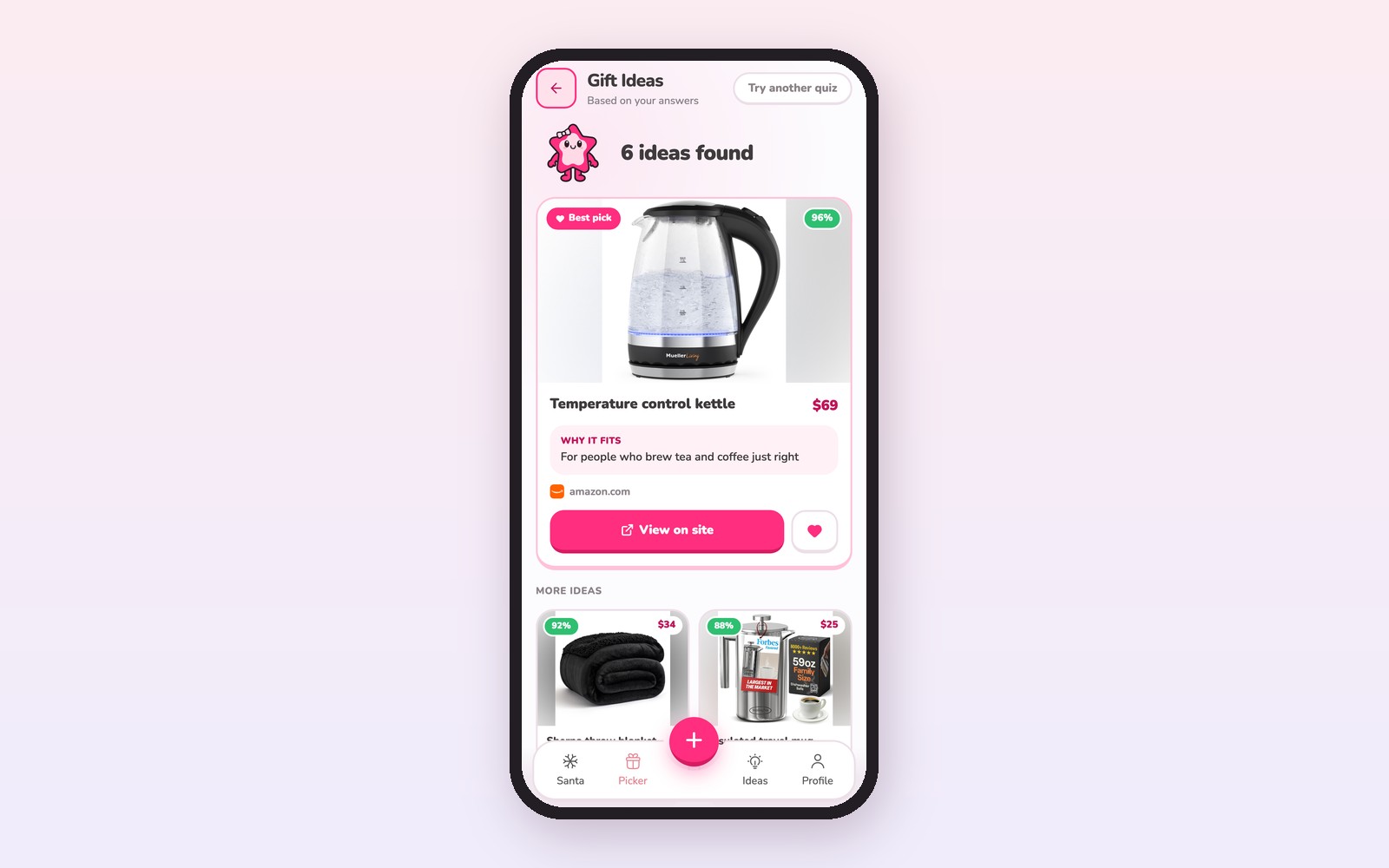
You can run the quiz for "an adult coworker" or "a mixed family group" when you do not know who will end up with your gift. For more ideas at the most common budget, see our $25 White Elephant gifts.[1]
Frequently asked questions
How many times can a gift be stolen in White Elephant?
The most common rule is three. After the third steal the gift is frozen and stays with its last owner until the end of the game. Smaller groups sometimes allow unlimited steals, but that tends to stall the game on one hot item. For large groups or kids, two steals keeps things moving and still gives everyone a real chance at the popular gifts.
Can you steal a gift back right after it is taken from you?
No, not in the standard rules. When your gift is stolen you take a turn right away, but you must open a new gift or steal a different one. You can try to take it back on a later turn, as long as it is not frozen yet. This rule prevents two people from passing the same gift between them forever.
What is a good budget for White Elephant?
For adults, $20 to $30 is the usual range, and $25 is a popular choice.[1] Offices often go lower, around $15 to $20, so nobody feels pressure.[1] Family games with kids can work at $10 to $15.[1] The exact amount matters less than everyone sticking to it, so write it in the invite and repeat it.
What is the difference between White Elephant and Secret Santa?
In Secret Santa, each person draws one name in advance and buys a gift for that specific person. In White Elephant, nobody knows who will get their gift, and gifts are opened and stolen in a game at the party. Secret Santa suits groups that want personal gifts. White Elephant suits parties that want a loud, funny hour together.
Related guides
Next, read stealing rules in detail, the Yankee Swap version, or how to run a free Secret Santa name draw. You can also browse all our gift exchange guides.