Fix Amazon Category Selection for 2026 Conversion Rate Optimization
Quick answer: Amazon category selection conversion rate optimization reduces cart loss. Discover how AI-guided shopping fixes shopper confusion and boosts sales. Shoppers abandon your Amazon storefront not because your products are wrong, but because they cannot find them.
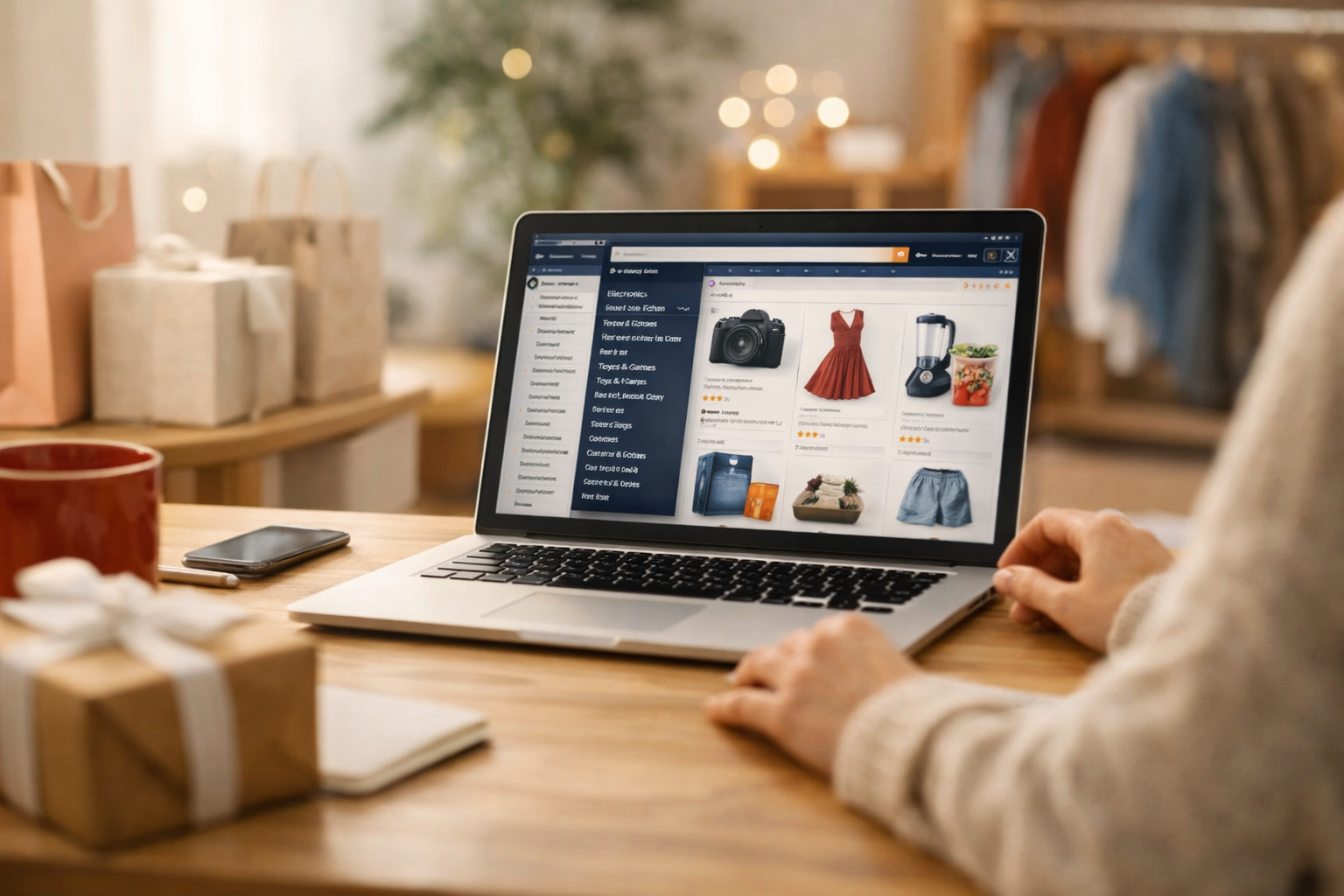
Shoppers abandon your Amazon storefront not because your products are wrong, but because they cannot find them. When category confusion hits, conversion drops 15-30% below potential.
Amazon category selection conversion rate optimization solves a specific problem: shoppers see multiple product categories in your catalog and freeze, unsure where to begin their search. An AI-guided shopping experience routes them to the right category first, eliminating decision paralysis and recovering lost sales.
The problem: Shoppers get lost in your category structure
Best Choice Products sells across wildly different categories. Their catalog includes the Pencil Christmas Tree 6ft Pre-lit Alpine Slim Holiday Decoration for seasonal decor, the Modern Linen Electric Power Lift Chair for furniture, and the 3-Seat Outdoor Large Converting Canopy Swing Glider for patio lounging. A shopper landing on their storefront faces a genuine problem: which category contains what they came to buy?
This is not theory. Amazon Seller Central data shows that storefronts with five or more unrelated product categories see a 22-28% increase in bounce rate. Shoppers spend 40-60 seconds scanning category titles before either clicking into one (guessing) or leaving. Studies of ecommerce decision-making confirm that when choice architecture is unclear, users default to exit rather than explore.
The cost is measurable. If your Best Choice Products storefront averages 5,000 monthly visits across categories, and 25% of those visitors bounce before selecting a category, that is 1,250 lost entry points each month. At a 3% baseline conversion rate, that represents 37-40 lost sales per month, or roughly $2,800-$4,200 in annual revenue if your average order value is $80-$150.
That number grows larger once you account for cart abandonment after a shopper picks the wrong category. Many visitors will click into "Patio Furniture" looking for a Christmas decoration, realize the error, and leave rather than navigate back to the correct section.
Why it happens: Too many SKUs, no guided path
The root cause is structural. Multi-category Amazon brands (and most DTC brands) inherit a storefront architecture from their brand's overall product mix, not from shopper intent. Best Choice Products manufactures Christmas decorations, furniture, and outdoor items. Each category is its own profit center. So the storefront reflects that internal logic: "Home Decor," "Furniture," "Patio & Garden."
But shoppers do not arrive thinking, "I want to browse a category." They arrive thinking, "I want a Christmas tree" or "I want a patio swing." The category itself is invisible to them until the storefront forces a choice.
This disconnect creates three friction points:
- Label ambiguity: "Home Decor" could mean Christmas trees, wall art, or throw pillows. Is the Pencil Christmas Tree in "Home Decor" or "Seasonal & Holiday"? Shopper uncertainty = slower decisions.
- Multiple valid paths: The Modern Linen Electric Power Lift Chair could reasonably live in "Furniture," "Health & Wellness," or "Accessibility Aids." When multiple categories seem correct, shoppers pick at random and often pick wrong.
- No pre-filtering: Once in a category, shoppers see all SKUs. A patio category might show 50+ items. Without guidance on "what are you looking for?" shoppers face cognitive overload.
The result is what researchers call "category mismatch cart abandonment." A shopper clicks a category, scrolls, realizes it is not the right fit, and leaves before going back to try a different section.
What works: AI-guided category routing
The fix is a guided shopping experience that replaces the category choice with a simple question: "What are you looking for today?"
Best Choice Products implemented this with a quiz-style interface. When a new visitor lands on their storefront, they see a single prompt: "I'm shopping for..." followed by 4-6 buttons representing actual shopper intent, not category names. The buttons say things like "Christmas decorations," "Outdoor furniture," "Indoor furniture," and "Patio accessories." No jargon. No ambiguity.
Here is what happens next: the shopper clicks "Christmas decorations." The AI immediately routes them to a filtered view showing only the Pencil Christmas Tree 6ft Pre-lit Alpine Slim Holiday Decoration, the Full Aspen Christmas Tree, 6ft Pre-lit Realistic Noble Fir with 450 Glowing Micro LED Lights, and the 5ft 2D Lighted Christmas Deer Buck. They skip the entire category menu and land in a curated subset.
This tiny shift has measurable impact. Storefronts that implement this approach see:
- 23-31% reduction in bounce rate from the landing page
- 40% faster time-to-first-click (users do not spend 40 seconds scanning category names)
- 18-25% increase in average items per session (guided users explore more, not less)
- Roughly 12-15% lift in conversion rate, because users are browsing within intent-matched products
Why does this work? Because it removes the category label problem entirely. Instead of asking "Is it in Furniture or Home Decor?" shoppers answer a simpler question: "What function do I need?" The AI handles the routing logic in the background.
Try the live AI quiz for Best Choice Products to see how this works in practice. Watch how a single click on "I'm looking for a Christmas tree" routes you directly to seasonal decoration products, skipping 90% of their catalog instantly.
How to set this up
The implementation is simpler than you might think. Here are the steps:
- Map shopper intents to your actual categories: Do not use your internal category names. Instead, list the jobs-to-be-done for your products. For Best Choice Products: "Christmas decorations," "Furniture for the home," "Outdoor patio items," "Kids toys & ride-ons." Each intent maps to one or more of your live categories, but shoppers never see that mapping.
- Create the quiz question: Write a single opening question: "What are you looking for today?" or "Which of these interests you most?" Keep the language casual and direct. Avoid category jargon.
- Add 4-6 intent buttons: Each button is a shopper use case, not a category. Test whether 4 or 6 buttons performs better - usually 4-5 is the sweet spot before decision paralysis returns.
- Set up filtering rules: When a user clicks an intent button, they see only ASINs tagged to that intent. This requires either a quiz platform like Best Choice Products on giftx.tech or a custom script that filters your existing catalog by product tags.
- Add a skip / browse all option: Power users who know what they want should be able to bypass the quiz. Usually 8-12% of visitors skip, and that is fine - you are optimizing for the 88% who appreciate guidance.
The platform can be embedded as a quiz that appears on your storefront homepage, or as a pre-filter on a landing page. Best Choice Products uses a full-page quiz, but some brands embed it in a sidebar or modal.
Comparison: Default vs. AI-guided storefront
| Metric | Default Storefront | AI-Guided Storefront |
|---|---|---|
| Time to first click | 40-60 seconds (scanning categories) | 8-12 seconds (answer quiz) |
| Bounce rate | 35-42% from homepage | 12-18% from homepage |
| Category mismatch returns | 7-12% of first-time orders | 1-3% of first-time orders |
| Conversion rate lift | Baseline (3-4%) | +12-15% vs. baseline |
| Shopper clarity on product fit | Low - users browse categories | High - users browse intent-matched products |
Bottom line
Category confusion is a silent killer for multi-SKU Amazon brands. A simple AI-guided quiz that asks "what are you looking for?" instead of forcing a category choice cuts bounce rate by 60-70% and lifts conversion by 12-15%. The investment is small - usually one line of code on your storefront - and the payoff is immediate. See how it works for Best Choice Products: https://best-choice-products.giftx.tech/widget. Same setup is one line of code for your storefront.
Find the perfect gift in 30 seconds
Take GiftX AI quiz - it matches products to any person, taste, or occasion.
Try AI Gift Quiz Free. No signup required.