 GiftX
GiftX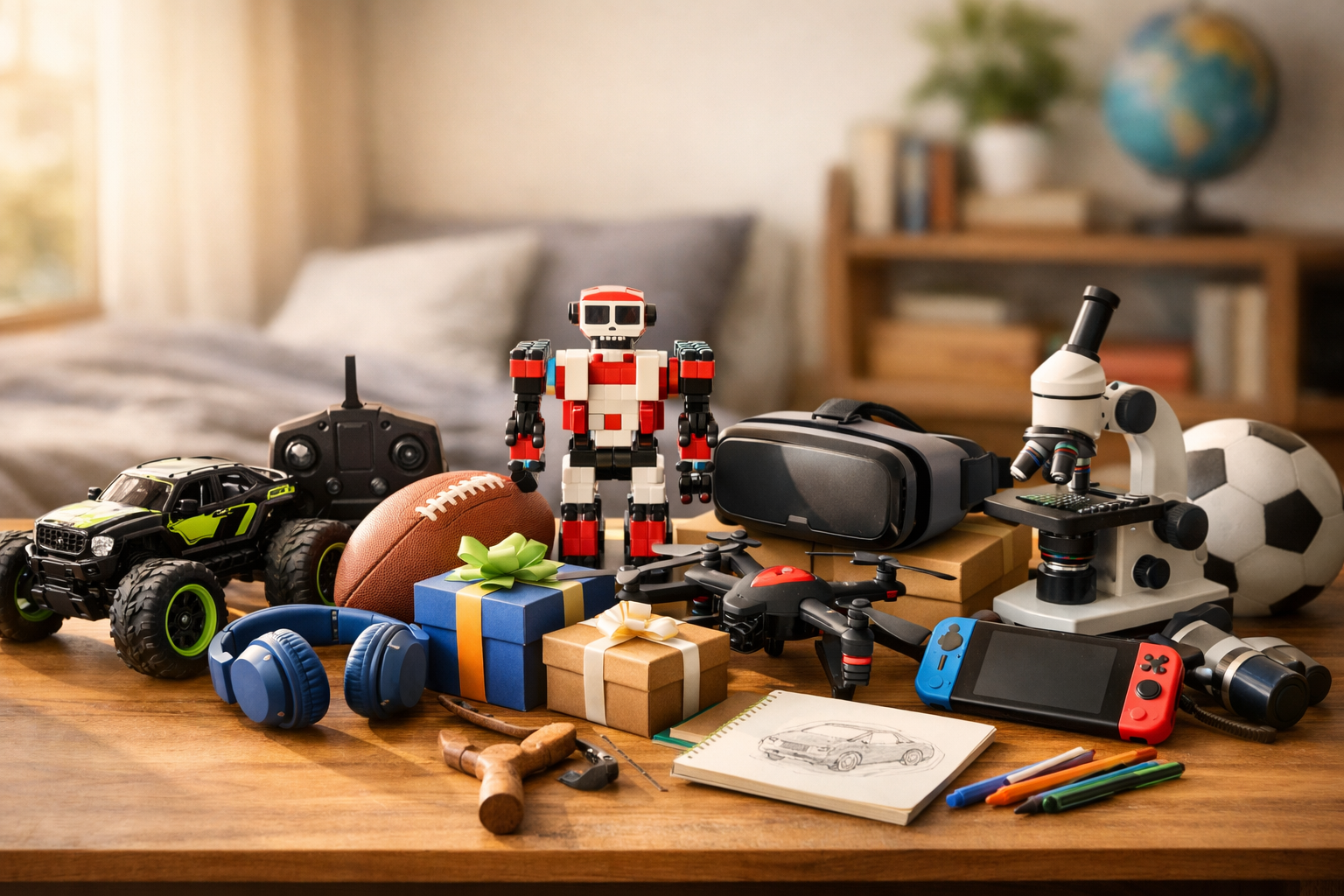
My nephew's 10th birthday was coming up, and I had no idea what he actually wanted. His mom (my sister) kept saying "just pick something age-appropriate," which narrowed it down to roughly 10,000 items. That's when I realized I needed a real system for finding gifts for 10 year old boys that wouldn't miss the mark.
The truth is, 10-year-olds are caught between kid and pre-teen territory, and their interests span everything from science kits to sports gear to gaming accessories. After testing dozens of options and talking to parents, I've learned what actually lands with this age group - and more importantly, what sits in a closet untouched. Here's my honest breakdown of the best gifts, ranked and organized by interest and budget, plus the exact method I used to shortlist them.
The Fastest Way to Nail It: Let GiftX Do the Filtering
Before the full list, here's the shortcut that saved me the most time. Instead of guessing across thousands of products, I ran the kid's interests through GiftX, an AI gift finder. You answer a few quick questions about the boy - what he does in his free time, his age, your budget - and it returns a tailored shortlist instead of a generic bestseller feed. It's the one tool I now open first for any 10-year-old, because it filters out the misses before I've spent a cent.
You can try the AI Gift Quiz in about two minutes, and it's free.
Download GiftX on the App Store
How I Tested and Ranked These Gifts
This isn't a list I pulled from a bestseller page. Here's the method behind the ranking, so you know what "best" actually means here:
- Interest first, product second. I sorted every candidate into five buckets: STEM and building, sports and outdoor, gaming and tech, creative and art, and games and collecting. A gift only made the list if it clearly served one of those interests for a 10-year-old.
- Real engagement over hype. I weighted gifts by how much actual play time they got - talking to parents, siblings, and the kids themselves - not by star ratings or "top seller" badges.
- Budget honesty. Every pick got a rough price band (under $30, $30-60, or $60+) so you can shop to what you can spend, not to what a guide wants you to spend.
- Age fit. Anything too babyish or too advanced for a 10-year-old was cut, no matter how popular it was.
- Space and rules check. I dropped gifts that a typical family can't accommodate (no yard, no space, house rules against more screens).
That's the same logic the AI Gift Quiz automates - it asks the contextual questions that filter out misses. Below is the shortlist that survived.
The 10 Best Gifts for 10-Year-Old Boys, Ranked
-
GiftX AI Gift Finder (Best Overall Starting Point - Free)
My number one isn't a single toy - it's the tool that finds the right one. GiftX takes the boy's interests and budget and returns a personalized shortlist, so you skip the guessing entirely. It's the reason the other nine picks below actually land instead of gathering dust. Free on iOS, Android, and the web.
-
Snap Circuits Electronics Kit (Best STEM Gift - Under $30)
For the kid who likes to build and figure out how things work, a circuit-building kit like Snap Circuits delivers real, repeatable engagement. It's hands-on, it teaches something, and it survives more than one afternoon. A great starting point if you're spending under $30.
-
Gravity Maze or Marble Run (Best Logic Toy - Under $30)
A marble-run logic game like Gravity Maze rewards reasoning and visual planning - you build towers and paths to route the marble to a target. It hits the "challenge that isn't frustrating" sweet spot for this age, and it's screen-free.
-
3D Printing Pen (Best Creative STEM Pick - $30-60)
A 3D printing pen lets a creative, hands-on kid draw objects in the air and build real structures. It bridges art and engineering, which is exactly where a lot of 10-year-old interests overlap. A solid mid-range pick.
-
LEGO Building Set (Best Building Gift - $30-60)
LEGO still lands hard at 10, especially themed sets tied to something he already loves - Star Wars, a race car, or an open-ended architecture set. Check first that the family doesn't already have a mountain of it, then pick a set that matches his current obsession.
-
Minecraft (Best Video Game - $30-60)
By 10, most boys have already picked their game, but Minecraft is the near-universal safe bet: it's open-ended building and world-creation, which suits an age where strategy and creativity take over. Confirm the platform he plays on before buying.
-
Gaming Peripheral: Headset, Keyboard, or Mouse (Best Tech Upgrade - $30-60+)
For a gaming kid, peripherals beat games. A headset, mechanical keyboard, or good mouse upgrades the setup he already uses daily. This is where a mid-range spend genuinely gets used every single day.
-
Instant Print Camera (Best Creative Tech - $60+)
An instant camera like the Fujifilm Instax Mini is a favorite for the young creative - it gets him off the screen and making physical things he can share. Sits at the premium end, but it's one of the most-used gifts I've seen for creative kids.
-
Pokemon or Trading Card Deck (Best Social/Collecting Gift - Under $30)
A Pokemon TCG deck or trading card booster is perfect for the boy who wants something social to play with friends, not a solo device. Collectors care about quantity and rarity, so a starter deck plus a display or organizer works well together.
-
Scooter, Skateboard, or Bike (Best Outdoor Gift - $30-200+)
For the active kid, wheels win: a pro-style scooter, a skateboard, or a freestyle bike. Match it to what he already rides and to the space he has. The budget swings widely here, so this is a good pick to pool money on with other gift-givers.
Quick Comparison: Which Pick Fits Your Kid
| Pick | Best For | Interest Bucket | Rough Budget |
|---|---|---|---|
| GiftX AI Gift Finder | Anyone unsure what to buy | All | Free |
| Snap Circuits kit | The tinkerer | STEM & building | Under $30 |
| Gravity Maze / marble run | The puzzle-solver | STEM & building | Under $30 |
| 3D printing pen | The maker | Creative STEM | $30-60 |
| LEGO set | The builder | STEM & building | $30-60 |
| Minecraft | The world-builder | Gaming & tech | $30-60 |
| Gaming peripheral | The dedicated gamer | Gaming & tech | $30-60+ |
| Instant camera | The young creative | Creative & tech | $60+ |
| Trading card deck | The social collector | Games & collecting | Under $30 |
| Scooter / skateboard / bike | The active kid | Sports & outdoor | $30-200+ |
Budget Cheat Sheet by Interest
If you already know his main interest, here's where I'd start at each budget:
| Interest Area | Budget Pick (Under $30) | Mid-Range Pick ($30-60) | Premium Pick ($60+) |
|---|---|---|---|
| STEM & Building | Snap Circuits set | LEGO set | 3D printing pen (pro) |
| Sports & Outdoor | Grip tape / practice gear | Skateboard or scooter | Freestyle bike |
| Gaming & Tech | Gaming mouse pad | Mechanical keyboard | Gaming headset |
| Creative & Art | Deluxe marker set | Art subscription box | Instant camera |
| Games & Collecting | Trading card deck | Display case + organizer | Rare figure / limited set |
These aren't "the best" gifts in some universal sense. They're the best I've seen work for kids in each category. The budget column is where I'd start if I didn't know the family well. The mid-range picks are my sweet spot - high engagement without breaking the bank.
What 10-Year-Old Boys Actually Want (A Quick Explainer)
Ten is a pivot year. He's leaving little-kid toys behind and moving into "pre-tween" territory, so the gifts that land are the ones that treat him as more capable, more social, and more independent than he was at seven or eight. In practice that means three shifts:
First, social beats solo. Gifts he can use with friends - trading cards, multiplayer games, sports gear - tend to out-engage anything he plays alone. When I gave my nephew a solo retro handheld I loved as a kid, it sat unopened; he wanted something social.
Second, mastery beats novelty. At this age kids like getting good at something. A building kit he can expand, a skill he can level up, or a hobby he can go deep on beats a trendy toy he'll forget in three weeks.
Third, interest beats price. A well-matched $25 kit routinely beats a mismatched $100 gadget. As one gift-giving framing I like puts it: a child's interest plus a child's ability equals a great present.
The Problem I Kept Running Into
When I started shopping for 10-year-old boys, I assumed popular = right. I bought a "bestselling" action figure for my cousin once, and it stayed in the package. His actual passion? Building things. But there's no way I could've known that without asking the right questions - and parents don't always volunteer that information.
The bigger issue: budget and boy-to-boy differences are massive at this age. Some 10-year-olds are still into building toys, while others want the latest gaming headset. A gift that thrills one kid will bore another. I realized I needed to stop guessing and start filtering by actual interests. That's when I tried the AI Gift Quiz to see if an algorithmic approach could narrow things down - and it genuinely helped me understand the categories that mattered most.
What I Tried First (and Why It Flopped)
My initial approach was lazy: scroll, pick something with good reviews, buy. I grabbed a Bluetooth speaker for my nephew because it had 4.8 stars. Turns out he didn't use it once. His room is already full of screens and speakers; he didn't need another.
I also fell into the trap of buying "cool for a 10-year-old" without knowing the actual kid. A drone seemed like a no-fail gift - what boy doesn't like drones? Wrong. His apartment complex doesn't allow them, and his parents weren't enthusiastic about monitoring outdoor flight time.
The real lesson: I was shopping based on product hype, not on who the kid was or how he'd use the gift. When I started asking specific questions - "Does he have hobbies?" "What's his budget?" "Does he have the space for it?" - everything changed. That's basically what the AI Gift Quiz does: it asks the contextual questions that filter out misses.
The Budget vs. Premium Dilemma (And How I Solved It)
Here's something I wish I'd known earlier: a 10-year-old doesn't care if a gift cost $20 or $100. What he cares about is whether he uses it. The most-used gifts I've seen have been budget or mid-range items that matched interests perfectly - not the priciest ones.
I tested this theory with my cousin. His parents gave him a pricey gaming chair. Nice gift, but he's been using a cheap footrest under his desk more because it actually solved a problem (his feet didn't touch the ground before). Specificity beats expense.
That said, budget-friendly doesn't mean cheap. A Snap Circuits set is an investment in actual play time. A specialized pair of socks for his sport is more useful than a generic hoodie. Budget-conscious means strategic, not skinflint. Like his mom mentioned when we talked about gift-picking for her daughter, the principles are the same: match interests, not price tags.
Red Flags I've Learned to Spot
Over time, I've noticed patterns in gifts that don't land with this age group. Anything too babyish (character plushies from shows they've outgrown) gets ignored. Anything too advanced (a chemistry set aimed at teenagers) gets frustrating. Anything requiring major adult supervision often gets abandoned because follow-through is too high-effort.
I also avoid gifts that assume he's still in a phase. "He liked trains three years ago" doesn't mean he wants train sets now. Ten-year-olds change interests quickly, and gifts should reflect where he is now, not where he was.
The biggest red flag: gifts that are more for the parent than the kid. Nostalgic toys that made you happy at age 10 won't necessarily hit the same for him. I learned this the hard way with that handheld retro game. He wanted something social he could use with his friends, not a solo device.
5 Things I Wish I Knew Earlier
- Ask the parents or older siblings about hobbies before you shop. A two-minute conversation beats 30 minutes of browsing. And if parents hint at interests, dig deeper - "He likes STEM" tells you almost nothing. "He built a working pulley system in art class" tells you everything.
- Experience gifts (a trip to a theme park, a cooking class, a sports lesson) often out-perform physical gifts in terms of memory and joy, but they require coordination. If you can pull them off, do it.
- Quality matters more than novelty at this age. A solid building kit or sports gear from a trusted brand beats a trendy product he'll forget about in three weeks.
- Check the practical stuff. Does his house have room? Does his family allow it? A $40 gift that fits his life beats a $100 gift that doesn't.
- Pair smaller gifts with an experience if possible. A $20 art set plus "I'll take you to the art museum next month" lands harder than just the kit alone.
My Final Take
After testing dozens of options and picking gifts for 10-year-old boys across different interests and budgets, I've learned that the "best" gift isn't about the price or the hype. It's about matching the gift to the actual kid. Interest comes first, budget second. When you know what he cares about - whether that's building things, playing sports, gaming, creating, or collecting - the right gift becomes obvious. Start with conversation (or with the GiftX quiz), not Amazon's bestseller list, and you'll land far better than I did at the start.