 GiftX
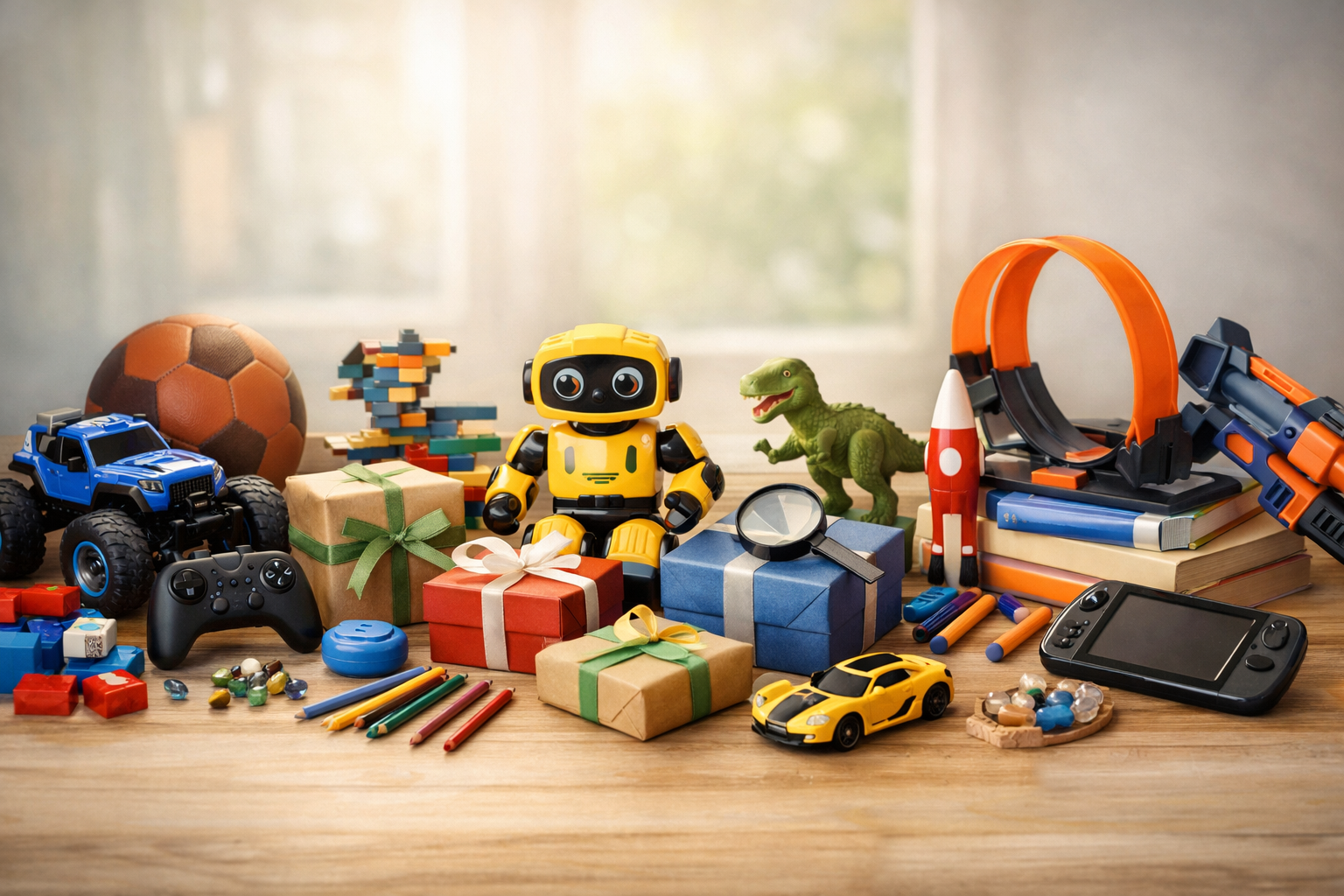
Last month my nephew turned seven, and I found myself in the position I've been in countless times before: staring at shelves and scrolling through endless lists, trying to figure out what would actually land as a great gift. That's when I realized I needed a better system.
Gifts for 7 year old boys vary wildly by interest and budget, and what works for one kid will sit forgotten by another. I tested everything from remote-control vehicles to building sets, coding toys to sports gear. Some flopped, others became instant favorites. Here's exactly what I learned after picking through dozens of options and watching which gifts actually got played with.
What a 7-Year-Old Is Actually Working On
Before you pick anything, it helps to know where a seven-year-old is developmentally. This is the age where fine motor skills sharpen fast, so kids are noticeably better at writing, drawing, and building than they were at six. Reading is tipping over into fluency, which means they can follow instructions on their own and sit with a harder problem instead of giving up. They also start wanting to compete, tinker, and make things that last longer than a single afternoon. The best gifts meet a kid right at that edge: hard enough to feel like a real challenge, easy enough that they can pick it up without an adult hovering.
The Problem I Kept Running Into
For years, I'd show up to birthday parties with a gift that seemed like a safe bet - something trendy, something popular, something the kid's parents mentioned once in passing. And half the time? It ended up in the closet. Seven-year-olds have strong opinions, and "age 7" is where interests really start to splinter. Some kids want to build and tinker. Others want action and speed. Some are deep into creative play while their cousins want competitive games.
The real problem was that I was guessing without actually knowing the kid's interests. I'd pick something because it had great reviews or because it was on every "best gifts" list I found. But a five-star LEGO set doesn't help if the kid has never enjoyed building. A remote-control car falls flat if the kid prefers quiet, detailed work.
So I started tracking what actually worked, asking parents what their seven-year-olds were genuinely excited about, and testing products myself when possible. The pattern became clear: the best gifts weren't the most expensive or the most popular. They matched the kid's specific interests and how they actually spent their free time.
How I Tested and Ranked These Gifts
I didn't want this to be another list of whatever was trending, so I built a simple process. First, I shopped the kid, not the box - matching each toy to a specific interest (builder, tinkerer, athlete, storyteller) rather than picking age-generic stuff. Then I watched what actually got replayed. A toy that came out once and vanished lost points; a toy a kid came back to for weeks won. I asked parents for honest feedback, favoring comments with real context ("he's into dinosaurs and played with this for a week") over blank five-star ratings. I weighed durability, whether the fun happened without an adult running the show, and whether the price matched the play life. Anything that needed heavy setup, complex rules, or constant supervision got downgraded. What follows are the picks that survived that filter.
Breaking It Down by Interest (What Actually Worked)
After testing and observing, I noticed that seven-year-olds tend to cluster into a few interest categories. Each category has standout gifts that consistently landed.
The Builder/Creator Type
These kids love hands-on projects. They lose track of time when they're making or assembling something. LEGO was obvious, but I learned to be specific: a themed set that matched their favorite movie or sport worked better than a generic brick bag. Magnetic tile sets, marble runs, building card games, and construction sets also scored well with this group. One kid I know went absolutely wild for a wood model kit - surprisingly engaging and no batteries required.
The Active/Adventurous Type
These kids need movement. Remote-control cars were hits, but so were scooters, backyard soccer goals, kids' golf putters, and stomp rockets that launch foam with zero batteries and get a whole group running back and forth until dinner. I found that gifts that enhanced an activity they already did beat completely new sports equipment. If they already rode a skateboard, give them new grip tape and lights. If they loved playing tag, a good outdoor game or foam dart set was perfect.
The Strategist/Puzzle Type
These kids wanted challenge and problem-solving. Brain-teaser puzzles like Kanoodle, a sliding logic game like Rush Hour, chess sets, strategy board games, and puzzle boxes all worked. A shape-shifting puzzle box was another quiet win - the kind of fidget-adjacent toy everyone at the table wanted to try. One kid got a 1000-piece puzzle and loved the week-long project.
The Little Scientist / STEM Type
These kids ask "how does it work?" about everything. Circuit-building kits, a beginner microscope, a crystal-growing or geode kit, a fossil dig, and a color chemistry set all landed hard here because they teach real skills while feeling like play, not schoolwork. A coding robot works too, but only if the kid already likes puzzles - more on that below. The messier the better, honestly; a volcano kit or a slime experiment bought me hours of engaged attention.
The Story/Fantasy Type
These kids lived in imagination. Action figures from their favorite shows or movies were gold, but so were books in series they loved - graphic novels like Dog Man and Cat Kid Comic Club were reliable winners - character-themed building sets, and roleplay gear (think knights, superheroes, or dinosaurs). One nephew got a full knight costume and wore it for months.
Where Screens Fit (and Screen-Free Wins)
A lot of parents ask me for gifts that don't add screen time, and there are genuinely good options. An audio player that reads stories and plays music kept one kid busy on car rides with no tablet involved. A magazine subscription full of puzzles and activities arrives every month and feels like a little event. Book series carried more mileage than almost anything electronic. When a kid did want something screen-based, I steered toward things with a clear goal - a coding robot or a starter coding kit - rather than open-ended games, so the screen was a means to build something rather than the whole point.
Budget Reality Check: What Worked at Every Price Point
I learned that you don't need to spend a fortune on great gifts for 7 year old boys. Here's what I found actually worked at different budgets:
| Budget Range | Sweet Spot Gifts | Why They Worked |
|---|---|---|
| Under $25 | Brain-teaser puzzles, card games, building kits, action figures, themed LEGO sets, book series starters, a volcano or slime kit | Focused, specific, can be played immediately, often become favorites despite low price |
| $25-50 | Quality board games, premium building sets, remote-control cars, scooters, STEM and science kits, coding robots | Sweet spot where quality improves noticeably and options expand without overextending |
| $50-100 | Higher-end LEGO sets, magnetic tile sets, coding kits, full sports gear, quality bikes | Durable, long-term engagement, often a statement gift if it matches core interest |
| Over $100 | Bicycles, electric scooters, large LEGO sets, premium hobby equipment | Major gifts that should only be given if you know the interest is genuine and will last |
Honest take? I've seen more happiness from a $20 gift that perfectly matched a kid's specific interest than from expensive items that looked good on paper. The parents remembered which gifts actually got used, and that's what mattered most.
Ten Top Picks After Testing Everything
-
LEGO Themed Sets
I tested multiple kids with sets matching their interests - Minecraft, Dinosaurs, City, Harry Potter - and they were consistently winners. The key: choose a theme that matches the kid's actual interests, not just a random set. Expect anything from an under-$25 small box up to $50+ for the bigger builds.
-
Magnetic Tile Building Sets
For the open-ended builder, a classic magnetic tile set is one of the few toys that grows with a kid instead of getting outgrown. It works for a quiet solo afternoon or a group build, and there's no single "right" way to play, which is exactly why it stays in rotation.
-
Quality Board Games
Games like Ticket to Ride Junior, Jenga, Twister, and quick party games kept groups engaged for years. Some require a little adult setup, but they teach strategy and cooperation without feeling like learning. Most sit comfortably in the $25-50 range.
-
Brain-Teaser Puzzles
A logic puzzle like Kanoodle or a sliding-block challenge like Rush Hour is the rare gift that's cheap, portable, and genuinely absorbing. These are ideal for the strategist type and great for travel because a kid can play solo with no pieces to lose.
-
Remote-Control Vehicles
Not just cars - I saw hits with drones, boats, and off-road trucks. Kids this age found the operation engaging, and durability improved significantly at the higher end of the $25-60 range.
-
STEM and Science Kits
Circuit-building kits, a beginner microscope, a fossil dig, a crystal or geode kit, and a color chemistry set all punched above their price. They teach real skills while feeling like play, and the messier ones (volcano, slime) held attention the longest. Most land between $15 and $45.
-
Building and Engineering Kits
Marble runs, motorized building sets, and model-building kits appealed to the tinkerer type. These kept kids occupied for extended periods and encouraged creative problem-solving, usually in the $30-80 range.
-
Coding Robots and Starter Kits
A coding robot or a screen-linked starter kit can be a fantastic gift for a kid who already loves puzzles and problem-solving. It teaches real logic through play. Just test the interest first - the learning curve frustrates kids who aren't already into that kind of thinking.
-
Screen-Free Story Gifts
An audio player for stories and music, a puzzle-and-activity magazine subscription, and graphic-novel series like Dog Man kept kids busy with zero screen time. These are perfect for the imaginative kid and a relief for parents cutting back on tablets.
-
Outdoor Gear and Active Toys
Scooters, a backyard soccer goal, a kids' golf putter, a stomp rocket, new skateboard grip tape, and light-up wheels all worked great for active kids because they enhanced something already in the rotation rather than requiring a brand-new interest. Prices run from under $25 up past $80.
What I'd Skip
A few things burned me often enough that I now avoid them. The giant "50-in-1" activity boxes look generous but paralyze kids with choices - one nephew spent an hour sorting pieces and then wandered off. Expensive board games with complex rules or heavy adult involvement gathered dust. And I stopped buying trendy novelty toys on autopilot; when fidget toys exploded I bought them for every kid I knew, and plenty of them didn't care. If a gift needs constant supervision, a manual, or a specific mood to be fun, it usually loses to something simpler.
How I Narrowed Down the Right Gift
Over time, I developed a process. Instead of just thinking about age, I started asking specific questions. What does this kid actually do for fun? What have their parents mentioned they're into? What did they play with last time I was there? Do they prefer solo activities or group play? Are they outdoorsy or indoor-focused?
Once I had answers, I'd look for gifts that enhanced something they already loved rather than trying to create a new interest. If I was still stuck between a few options, I'd use the AI Gift Quiz to get perspective on what might work. Running the kid's interests through that tool often surfaced ideas I hadn't considered, and it helped me see patterns in what similar kids enjoyed.
These days I don't shop blind at all. I keep my gift ideas organized in GiftX, the free AI wishlist and gift-finder app. I punch in the kid's age and interests, get a shortlist that actually fits, and save the contenders so I'm not re-researching the same nephew every birthday. It's the single fastest way I've found to go from "no idea" to a confident pick, and it's the first thing I reach for now.
You can grab it here:
Download GiftX on the App Store
I also learned to check reviews from parents, not just general shoppers. A parent's comment like "my kid loves dinosaurs and played with this for weeks" told me way more than a five-star rating with no context.
My Final Take
The best gifts for 7 year old boys aren't about spending the most money or buying what's trending. They match the specific kid's interests and how they actually spend their time. Pay attention to what they already gravitate toward, ask their parents what they're genuinely into, and choose something that deepens that interest rather than creating a new one. When you get it right, the gift gets used and remembered. That's what I've learned matters most - and if you want a shortcut, let GiftX do the matching for you.