Classroom Secret Santa: A Teacher's Guide to a Fair Gift Exchange
A teacher's plan for a classroom Secret Santa: parent letter, class name list, low budget, a fair draw, backup gifts and a calm exchange day in class.
Short answer: a classroom Secret Santa needs four things: a note home so families can opt in, a Secret Santa list of every participating student with one wish each, a low fixed budget, and a few backup gifts in the teacher's drawer. Draw names in class with a method that prevents kids from pulling their own name, and open gifts together on the last day before break.
A class exchange is lovely when it works and painful when one child goes home empty-handed. Almost every problem teachers report comes from the same gap: no plan for the student whose gift does not show up. Build that plan first and the rest is easy.
Check school policy and decide who joins
Before anything goes home, ask your principal or team lead. Some schools ban gift exchanges, some cap budgets, some ask that holiday activities be optional and not tied to one holiday. Many classrooms call it a "Secret Snowflake" or "winter gift swap" so every family feels welcome.
Make it opt-in. Kids whose families say no can still take part in the party, help with wrapping paper art, or join a class craft swap instead. Never make a child explain why they are not playing.
Write the note home
The parent note does most of your work. Keep it short and include:
- What it is. Each child draws one classmate's name and brings one gift.
- The budget. One number, usually low. Five to ten dollars is common in elementary school.
- The deadline to opt in. A date one week out.
- The exchange day. Usually the last day before winter break.
- Gift guidance. New, unwrapped or wrapped, no food if your class has allergies, nothing that needs batteries the family must buy.
- A wish line. "Your child will write one thing they would like. You can add a size or color."
Send it home with a tear-off slip. A slip in the backpack beats an email nobody opens in December.
Build your Secret Santa list
Once slips come back, make a class Secret Santa list. It is the teacher's master sheet and the thing that prevents most problems.
| Column | Example | Why you need it |
|---|---|---|
| Student name | Maya R. | The draw pool |
| Opted in | Yes | Only these names go in |
| Wish | Drawing markers, purple | Helps the giver's family shop |
| Allergy or note | No nuts | Protects the receiver |
| Gift arrived | Checked | Spot missing gifts early |
Ask each child to write their wish on a small card in class. Kids write things like "slime" or "a Lego set," which is fine. The family of the giver uses it as a direction, not an order.
Draw names fairly in class
The draw itself is part of the fun for kids, so most teachers do it on paper. The goal is that nobody draws their own name and nobody sees anyone else's.
- Write each participating student's name on a folded card.
- Call students up one at a time to draw.
- If a child pulls their own name, they put it back and draw again before anyone else goes. With the last two students, check first and swap if needed.
- Each child writes their pick on a slip that goes home in an envelope.
- Keep a private copy of every pair on your class list.
Unlike an adult exchange, the teacher should know every pair here. You are the safety net, and you need to know whose gift is missing on exchange day.
Running it online for older students or room parents
Middle and high school classes, clubs and room parent groups often prefer an online draw. GiftX Secret Santa is free and works in the browser or the app. The organizer creates a group with a name and the budget, which everyone in the group sees, then shares one invite link. Students or parents join in one tap, and each member adds a wish. Once at least two people have joined, the organizer starts the draw, and each person sees only the name they drew.
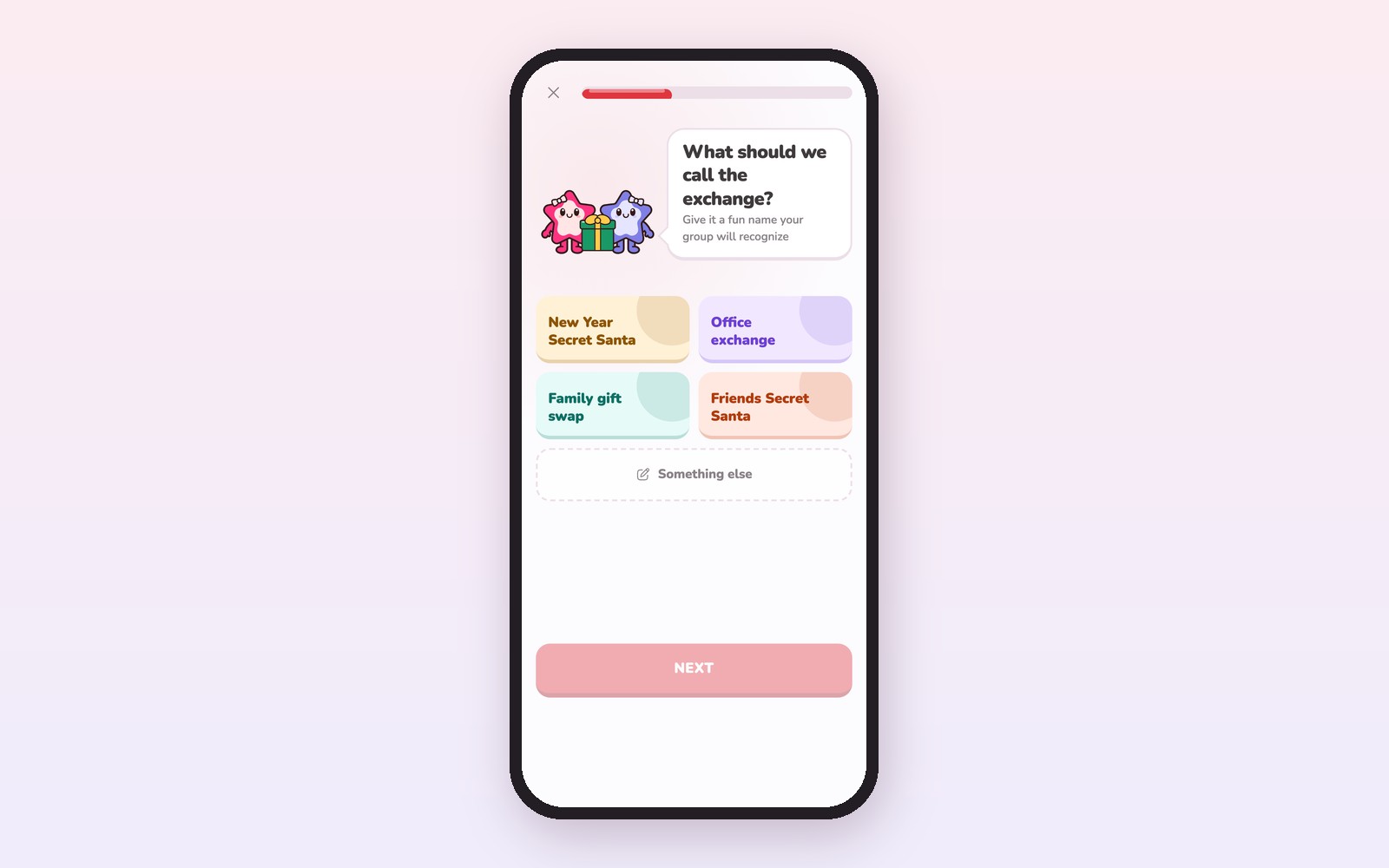
Because the organizer does not see the other pairs in GiftX, keep a separate plan for missing gifts: ask everyone to bring their gift to the room parent or teacher the day before, so you can see that every student has one. If someone joined by mistake, such as a sibling, the organizer can remove them before the draw. When a family is stuck, GiftX can suggest gift ideas within the budget.
Budget and gift ideas that work in a classroom
Keep it low. A low budget protects families who are stretched in December and stops gifts from becoming a contest.
| Grade | Typical budget | Good gift types |
|---|---|---|
| Kindergarten to second grade | $5 to $10[1] | Crayons, stickers, a small book, play dough |
| Third to fifth grade | $5 to $15[1] | Markers, a card game, a puzzle, slime kit |
| Middle school | $10 to $15[1] | Fun pens, a paperback, a fidget, a keychain |
| High school | $10 to $20[1] | Snacks if allowed, a mug, a phone stand, a journal |
Skip anything with small parts for young kids, anything scented if students have sensitivities, and anything that needs a screen. For more, see Secret Santa gifts for kids.
The backup gift plan
This is the part that keeps a child from crying on the last day. Keep three or four wrapped backup gifts in your closet, bought with your class budget or donated by a room parent.
- Check your list two days before. Message families whose gift has not arrived.
- On the morning of the exchange, swap a backup gift into the missing spot.
- Label it with the receiver's name and the giver's name as usual. The giver does not need to know.
- Never tell the class that a gift was a backup.
Exchange day in class
Keep it calm and short. Twenty minutes is plenty for most classes.
- Gifts go in a pile under or near the class tree or a decorated box.
- Students sit in a circle.
- Hand out gifts by name, all at once, or open one by one if the class is small.
- Each student says thank you to their Santa by name.
- Collect wrapping paper in a bag before it covers the floor.
For older classes, a guessing round before the reveal adds fun. Our guide to Secret Santa reveal ideas has a few that work in a classroom.
Frequently asked questions
What should a classroom Secret Santa list include?
Every participating student's name, whether they opted in, one wish written by the child, any allergy or note, and a column to check off when the gift arrives. The teacher keeps it private. It is the tool you use to spot missing gifts early and to make sure the draw only includes kids whose families said yes.
How much should a class Secret Santa gift cost?
Most elementary classes use five to ten dollars, and middle and high school classes go up to fifteen or twenty. Lower is better: it protects families with tight budgets and stops gifts from turning into a competition. Write one number in the parent note, not a range.
What if a student forgets their gift?
Use a backup gift from your closet and label it as usual. Then follow up with the family privately after the party. If the gift arrives later, keep it as a backup for next year. The child who receives the backup should never know.
Can kids who do not celebrate Christmas take part?
Yes, if their families want to. Name it a winter gift swap or Secret Snowflake, keep decorations general and make participation optional. Kids who do not join can help with the party or join a class craft swap, so nobody is left out.
More classroom guides
Writing letters with your class too? See the Letter to Santa classroom activity. For the general rules, read Secret Santa rules, or browse all our gift exchange guides.