Letter to Santa Classroom Activity: A Lesson Plan for Teachers
A letter to Santa classroom lesson plan: class template, timing, differentiation, an inclusive winter letter option, student samples and display ideas.
Short answer: a letter to Santa classroom activity works best as a short friendly-letter lesson: model the five parts of a letter, give students a simple template with sentence starters, let them write and illustrate for about twenty minutes, and share a few aloud. Offer every child the choice of a winter letter to someone else, since not every family celebrates Christmas.
Writing to Santa is one of the easiest ways to teach letter format in December. Students care about the reader, they have plenty to say, and the finished letters make a great hallway display. The plan below fits one class period for kindergarten through third grade, with notes for adjusting up or down. It also covers the inclusive option, which matters more than a lot of holiday lesson plans admit.
Learning goals for the lesson
Keep the goals about writing, not about Santa. That makes the lesson easy to justify and easy to adapt.
- Students can name the parts of a friendly letter: greeting, body, closing and signature.
- Students write at least two sentences to a specific reader.
- Students include one detail about themselves and one question for the reader.
- Older students use a comma after the greeting and closing.
Materials and prep
- A large sample letter on chart paper or the board, with the parts labeled.
- A class template, printed one per student (see below).
- Pencils, crayons and a few stickers for decorating.
- A word wall of holiday and winter words: snow, reindeer, sled, cocoa, mittens, family, present.
- Envelopes, if the letters are going home or into a class mailbox.
Prep time is about fifteen minutes, mostly printing.
A letter to Santa template for the class
This is the version that works for most early elementary classes. Print it with wide lines and a drawing box at the bottom.
- Dear __________, (Santa, or a reader of their choice)
- My name is __________. I am in grade __________.
- Something I liked this year was __________.
- I want to ask you __________.
- I hope __________.
- From, __________
Line one is the inclusive key. Students who do not celebrate Christmas can write to a grandparent, a favorite book character, a winter animal or a future version of themselves. Everyone uses the same template, so nobody stands out.
Lesson timing at a glance
| Part | Time | What happens |
|---|---|---|
| Hook | Five minutes | Read a short winter or Santa picture book, or show the sample letter |
| Model | Ten minutes | Label the parts of the sample letter together, write one live |
| Write | Twenty minutes | Students fill in the template, then illustrate |
| Share | Ten minutes | Volunteers read one line aloud, class names the part of the letter |
Adjust the writing time to your group. Kindergartners may need two shorter sessions on separate days.
How to differentiate
The same template stretches across a wide range of writers.
- Emerging writers: students draw each answer and dictate a word to you or a classroom helper. Invented spelling is welcome.
- Developing writers: students use the template plus the word wall, writing one sentence per line.
- Confident writers: remove the starters after line one and ask for a full paragraph, plus a second question.
- Multilingual learners: allow a line in their home language next to the English one. It makes a lovely display.
Sample student letters to show the class
Show one sample at a time. These sound like real students, with the spelling left as it is.
A kindergartner writing to Santa:
Dear Santa,
My name is Ava. I am in K.
I liked the pumpkin patch trip.
Do you hav a dog?
I hope you hav a good Christmas. From, Ava
A first grader writing to a grandparent:
Dear Grandma,
My name is Omar. I am in grade 1.
Something I liked this year was learning to read the word because.
I want to ask you what your favorite winter food is.
I hope you come visit when it snows. From, Omar
A second grader writing to Santa:
Dear Santa,
My name is Grace and I am in grade 2. Something I liked this year was being line leader.
I want to ask you how many cookies you eat on Christmas Eve. My guess is a hundred.
I hope the reindeer stay warm. From, Grace
Displaying and sending the letters
The finish matters to kids. Pick one:
- Hallway display titled "Our Winter Letters", each letter next to its drawing.
- Class mailbox. A decorated box students "mail" their letters into, opened on the last day before break.
- Send home in an envelope so families can keep the letter or mail it themselves.
- Reply letters. If you have time, write a short group reply from Santa or a winter character.
If your school allows mailing letters through a post office program, check the official site for this year's dates and rules first, and get permission from families. Our guide on where to send a letter to Santa explains the main programs.
A note home for families
Many parents love seeing the letter, and some want to turn the wishes into something relatives can use. A short note home can include a tip like this one: at home, families can add a child's wishes to a free GiftX wish list with a photo, price and link, then open GiftX Letter to Santa. It turns the list into a picture of a handwritten-style letter with each wish and its photo, in four styles, which they can save or send to grandparents.
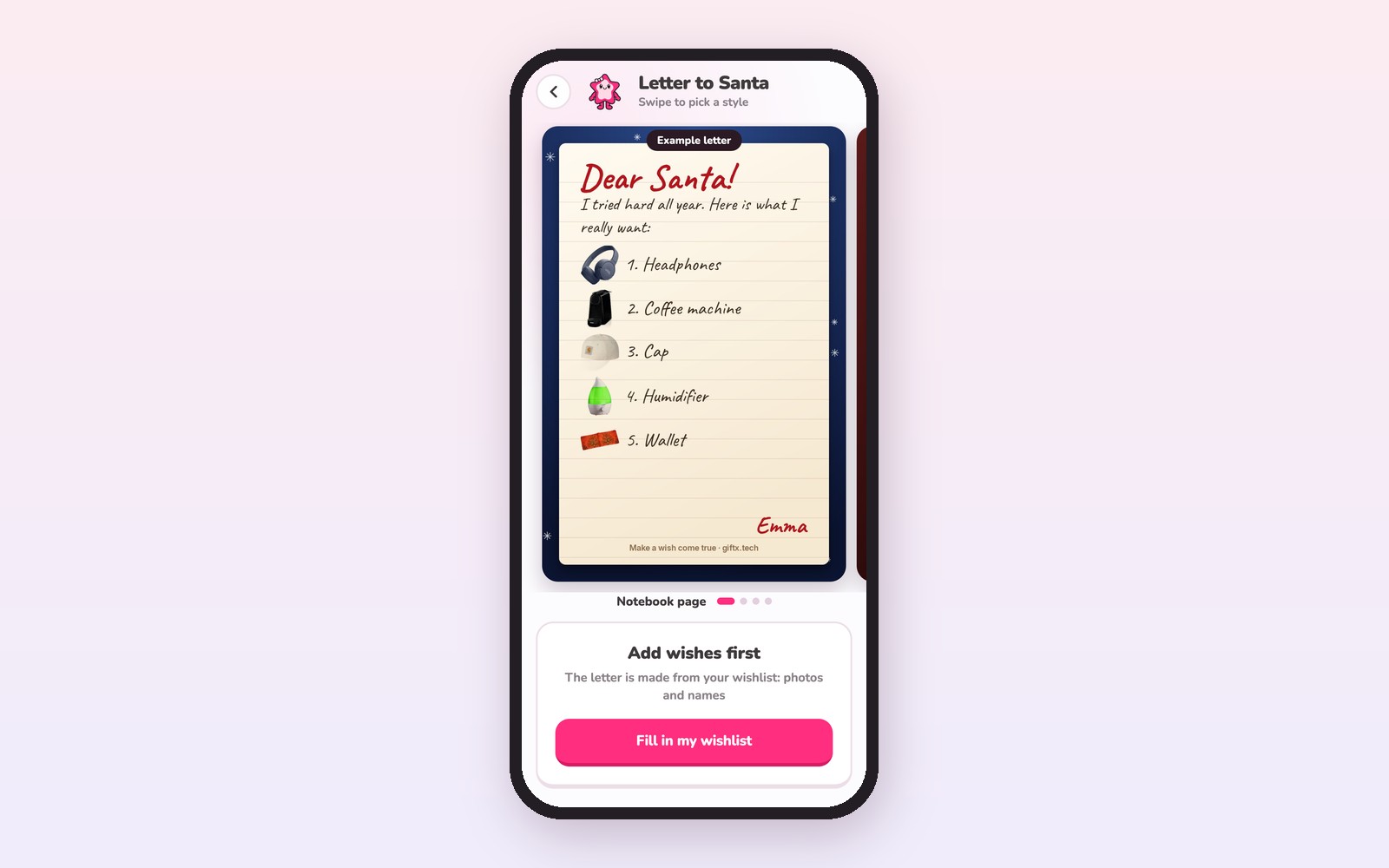
It is a family tool, not a classroom one: it is a picture, not a printable worksheet, and nothing is mailed to the North Pole. The handwritten classroom letter stays the real letter. Keep the note optional and neutral, the same way you would mention any holiday tradition.
Frequently asked questions
How do I make a letter to Santa activity inclusive?
Let every student choose their reader. Santa is one option, alongside a grandparent, a favorite character, a winter animal or a future self. Use the same template for everyone so nobody has to explain their choice. Keep the lesson goal on letter writing, and avoid asking students to list gifts, which can be hard for kids whose families are going through a tough season.
What grade is a letter to Santa activity best for?
It works from kindergarten through third grade with the same template. Kindergartners draw and dictate, first and second graders write a few sentences, and third graders can write a full paragraph with commas in the greeting and closing. Older students can write a persuasive or funny version, which keeps the activity fresh.
Should students include wish lists in classroom letters to Santa?
It is better to keep wish lists out of a classroom letter. Lists invite comparisons between students and can be uncomfortable for families with less to spend. Focus the template on the student's year, a question for the reader and a kind wish. Families who want a wish list can make one at home.
Related guides for teachers
For a full class gift exchange, read classroom Secret Santa. For early writers, see the kindergarten letter to Santa guide. For paper layouts, try the letter to Santa printable, or browse all our gift exchange guides.