White Elephant Game Variations: 10 Ways to Play the Gift Swap
Ten tested ways to change the White Elephant game: new steal rules, gift themes, faster formats and gentle versions for shy or mixed groups.
Short answer: the White Elephant game has many variations, and the best ones change only one thing at a time: how stealing works, what kind of gifts people bring, or how fast the turns go. Pick one twist per year, explain it before the first gift is opened, and keep everything else the same as the classic rules.
Groups that play every December get tired of the same hour. Someone always steals the same blender, the first player always gets robbed, and the last ten minutes drag. A variation fixes that without making people learn a whole new game. Below are ten that work, grouped by what they change, with a quick table to help you choose.
How the classic White Elephant game works
Every variation starts from the same base. Each player brings one wrapped gift within a set budget, draws a number for turn order, and on their turn either opens a wrapped gift or steals one that is already open. A player who loses a gift picks again right away. A gift freezes after three steals, and player one gets a final swap at the end.
If your group has never played, start with the plain version from our White Elephant rules. Variations are more fun once everyone knows what is being changed.
Variations that change the stealing
Stealing is where the drama lives, so small changes here feel big.
- 1.[1] One steal per turn. Only one steal can happen before a new gift must be opened. The person who was robbed opens a wrapped gift instead of stealing again. This stops long chains and is close to how many families play Yankee Swap.
- 2.[1] Steal and swap. Instead of taking a gift and leaving the other person empty handed, the thief trades their own opened gift for the one they want. Nobody is ever left with nothing, which suits kids and polite offices.
- 3.[1] Lock card. Each player gets one "lock" card for the whole game. At any moment, once, they can play it to freeze the gift they hold, even if it has never been stolen. After that, nobody can take it.
The lock card version is the favorite of competitive groups. People spend the whole game deciding when to use it, and a well timed lock gets a cheer.
Variations that change the gifts
These keep the rules the same and change what goes in the pile. They are the easiest to explain.
- 4.[1] Theme night. Everyone buys within one theme: cozy, kitchen, games, things for the car, or "something you would want yourself". Themes make shopping easier and the pile looks better.
- 5.[1] Regift edition. Every gift must be something already in your home that you never used. Zero budget, lots of laughs, and a good fit for January parties after the holidays.
- 6.[1] Mystery wrapping. Gifts are wrapped to hide their shape: a small item in a cereal box, a soft gift in a tube. Players cannot judge by size, so the first picks are pure luck. Our funny wrapping ideas help with this one.
Theme night works best with a budget of about $20 to $30, because the theme narrows the choice and people can find something good in that range.[1]
Variations for speed and big rooms
A classic game with thirty people can run over two hours. These two formats cut that down.
- 7.[1] Open first, steal later. Everyone opens a gift in turn order with no stealing at all. Then the host sets a timer for a few minutes and calls out numbers at random. Each called player may steal once. When the timer ends, the game ends.
- 8.[1] Pass the parcel. Players sit in a circle holding a wrapped gift. The host reads a short story full of the words "left" and "right", and everyone passes their gift the matching way each time. When the story ends, everyone opens what they hold. Then you can allow one round of steals or none.
Both formats keep everyone busy at once instead of watching one person at a time. For more ideas on crowd control, see White Elephant for large groups.
Variations for shy or mixed groups
Some people hate taking a gift from someone's hands. These versions let chance do the stealing for them.
- 9.[1] Dice White Elephant. Players roll a die on their turn and follow a chart: open a gift, steal, swap with the person on the left, or skip. The dice decide, so nobody looks greedy. Our White Elephant dice game has a ready chart.
- 10.[1] Card draw. Shuffle a deck of action cards you write yourself: "Steal from anyone wearing red", "Trade with the youngest player", "Keep your gift and pass". Each player draws one card per turn. It works with kids, grandparents and coworkers who do not know each other well.
Pick a variation for your group
Use the table to match the twist to the room. If two rows fit, choose the one that needs fewer new rules.
| Your group | Try this | Why it works |
|---|---|---|
| Very competitive friends | Lock card | Adds strategy without longer turns |
| Polite office | Steal and swap | Nobody is left empty handed |
| Over twenty people | Open first, steal later | Everyone acts at once |
| Kids and adults together | Card draw or dice | Chance takes the blame for steals |
| Tight budget year | Regift edition | No shopping needed |
| Same group every year | Mystery wrapping or theme night | Fresh feel, same rules |
Mistakes that ruin a good variation
Most variations fail for the same few reasons, and all of them are easy to avoid.
- Too many changes at once. One twist per game. Two is the limit.
- Explaining it mid game. Read the rule out loud before the first gift, then answer questions.
- No written chart. For dice or card games, print or write the chart on a big sheet so nobody argues.
- Forgetting the freeze. Even with new rules, a gift should stop moving at some point.
- Changing the budget with the format. Keep the budget your group knows, unless the variation is the regift edition.
Bring a gift that wins in any version
Every variation still needs good gifts in the pile. The ones that work everywhere are useful with a little fun: a soft throw, a party game, a small kitchen gadget, a nice tumbler. If you are stuck, the GiftX gift quiz can help. Answer five quick questions about the group, the age range, interests and your budget, and GiftX shows gift ideas with prices and store links.
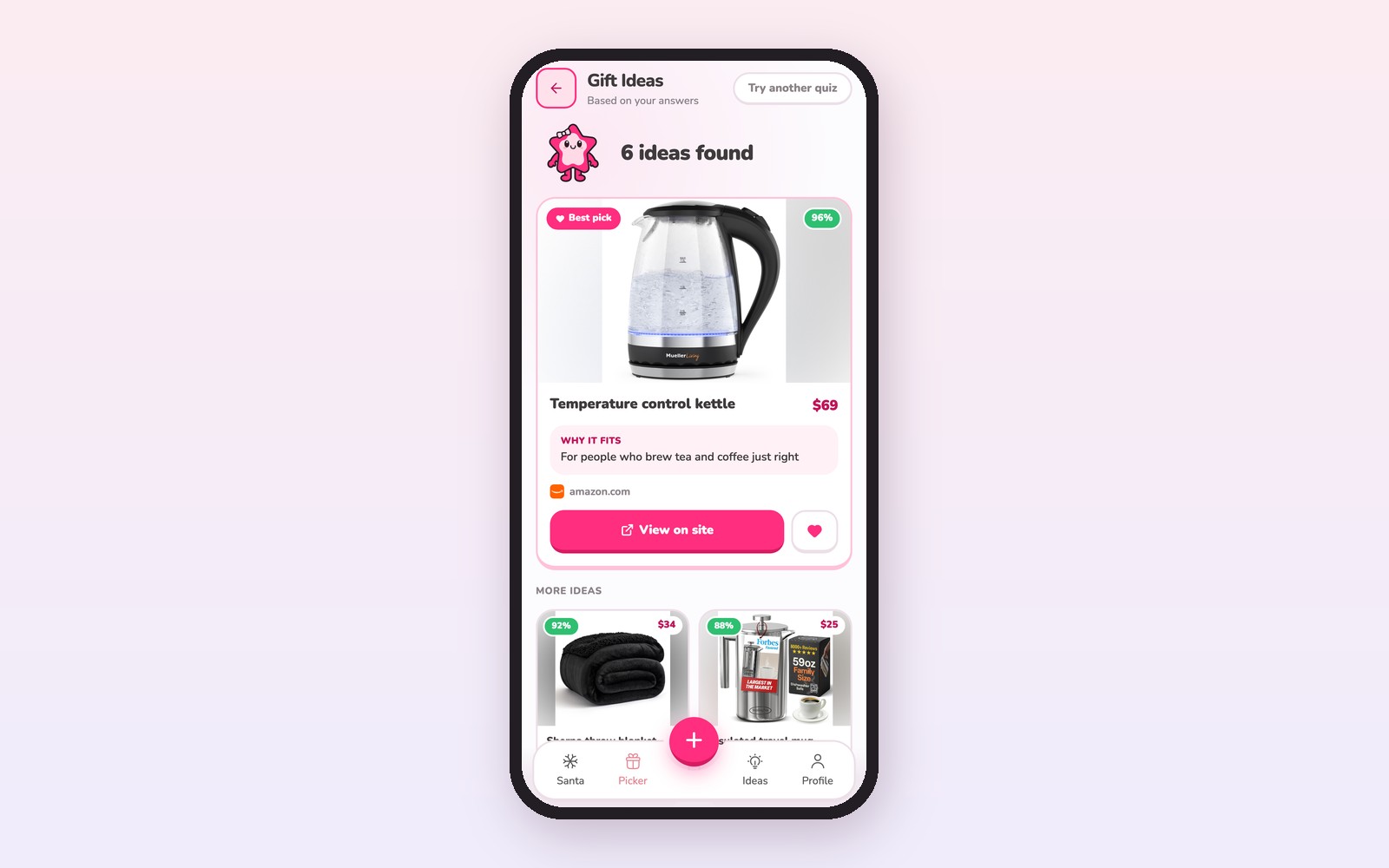
The quiz is handy for White Elephant because you do not know who will end up with your gift. Run it for "adults with mixed interests" and you get ideas that suit almost anyone. For a ready list at the most common budget, see our $25 White Elephant gifts.[1]
Frequently asked questions
What is the most popular White Elephant variation?
Yankee Swap style rules, with one steal per turn, are probably the most common twist, because they keep the game moving without changing much. Theme nights are a close second for groups that play every year. Dice versions are popular with families and offices where people feel awkward taking gifts from each other. Pick the one that solves your group's actual problem.
How do you make White Elephant faster?
Lower the steal limit to two, allow only one steal per turn, or use the open first, steal later format with a short timer. In very big groups, split into smaller circles of ten to fifteen people that play at the same time. Each of these cuts the waiting, which is what makes a long game feel slow.
Can you play White Elephant without stealing?
Yes. Pass the parcel with a left and right story, a straight swap where each player trades once, or a dice game where the chart has no steal rolls all work. You lose some of the drama, but shy groups, young kids and some workplaces prefer it. Keep a budget and wrapping rules so the gifts still feel like a game.
Do variations work for virtual parties?
Most do. Theme night, steal and swap, card draw and dice all work on a video call, since the host can roll or draw on camera. Pass the parcel does not work online because gifts cannot move. For the full setup, read our guide to virtual White Elephant on Zoom or Teams.
Related guides
Read how stealing and freezing work, compare the game with a Secret Santa draw, or browse all our gift exchange guides.